Our Blog is a hub for boating enthusiasts, professionals, and first-time buyers alike. We share insights on outboards, boats, and marine equipment, along with maintenance tips, buying guides, shipping advice, and the latest industry updates. Whether you’re interested in fishing boats, yachts, or high-performance outboards, our blog provides reliable information to help you make informed decisions and enjoy the best of life on the water.
Installing a marine inboard diesel engine is considerably more than lowering the engine into the engine room and connecting the controls. The engine, marine gearbox, mounts, propeller shaft, coupling, propeller,…
A marine diesel exhaust system performs two essential functions: safely removing combustion gases from the engine and managing the heat, noise and emissions produced during operation. Unlike a road vehicle,…
The lubrication system is fundamental to marine diesel reliability because it creates a controlled film of oil between moving components that would otherwise experience direct metal-to-metal contact. Engine oil lubricates…
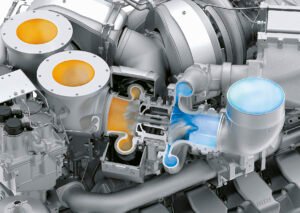
Turbocharging is one of the technologies that allows modern marine diesel engines to produce substantial power from relatively compact engine packages. A turbocharger uses energy contained in the engine’s exhaust…
A marine engine cooling system has one fundamental responsibility: remove the heat generated by combustion and keep the engine operating within its designed temperature range. Unlike an automotive engine that…
Marine diesel fuel consumption is determined by far more than the horsepower printed on an engine specification sheet. The actual amount of fuel a vessel burns depends on the relationship…
High-speed and medium-speed marine diesel engines are both established propulsion technologies, but they are engineered around different operating speeds, power characteristics and vessel requirements. In general marine-engine terminology, high-speed diesel…
Horsepower, torque and displacement are three of the most important specifications when comparing marine diesel engines, but they describe different characteristics of the same power-producing system. Horsepower expresses the rate…
Choosing a marine diesel engine is fundamentally a vessel-engine matching exercise. The correct engine is determined by the boat’s displacement, hull design, target speed, operating load, annual running hours, propulsion…
There is no single marine diesel engine brand that is objectively the best for every vessel. Yanmar, Volvo Penta, Cummins, Caterpillar, MAN and mtu occupy different positions across recreational boating,…