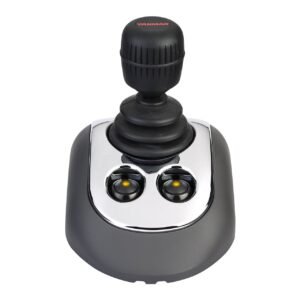
YANMAR JC20A Shaft drive Joystick Control System Specifications TypeControl System...
Read MoreCommercial Marine Engines
Professional marine propulsion for operators who depend on their vessels to perform day after day.
Commercial Marine Engines Built Around the Working Vessel
A commercial vessel is a working asset, and its propulsion system has to be selected around the work that vessel is expected to perform. Fishing boats, passenger ferries, offshore support vessels, tugboats, patrol craft, charter vessels, utility boats and workboats can spend substantially more time underway than a typical recreational craft, often operating with heavy payloads, variable loads and demanding duty cycles. That changes the engine requirement. Fuel economy, torque, service intervals, emissions compliance, cooling capacity, reliability and access to technical support can all influence the commercial value of a propulsion system. We source commercial marine engines across Yanmar, Volvo Penta, Cummins, Caterpillar, MAN and mtu, giving operators access to propulsion solutions ranging from compact professional engines to extremely high-output marine power.
Built for the Job, Not Just the Horsepower
The appropriate commercial engine begins with the vessel’s job description. A fishing boat repeatedly accelerating away from a harbor has different requirements from a passenger ferry maintaining a scheduled route. A tugboat needs substantial low-speed pulling capability, while an offshore support vessel may prioritize endurance and sustained propulsion under load. A fast patrol vessel introduces another set of priorities, including acceleration, power density and high-speed operation.
For this reason, commercial marine propulsion is commonly specified according to duty rating, operating hours, load profile and vessel application, rather than peak horsepower alone. Transmission selection, propeller loading and shaft configuration then determine how effectively that engine’s output becomes useful thrust. For a new build, these decisions can be incorporated into the vessel design. For an existing boat, the current engine, gearbox and propulsion arrangement provide the starting point for a repower assessment.
Commercial Marine Engines by Application
Fishing Vessels
Commercial fishing vessels can require substantial torque, dependable starting, economical fuel consumption and the ability to operate for long periods under changing loads. Engine selection is influenced by hull type, fishing method, vessel displacement, cruising distance and the amount of equipment carried onboard.
Tugboats and Workboats
Tug and utility operations place particular emphasis on torque, durability and propulsion response. The engine and reduction gear must be matched to the vessel’s propeller and the type of work being performed, especially where bollard pull or frequent maneuvering is involved.
Passenger Vessels and Ferries
Passenger vessels often operate according to schedules, making predictable performance and maintenance planning particularly important. Depending on the route and vessel design, propulsion may be optimized around cruising efficiency, acceleration, emissions compliance or continuous-duty operation.
Offshore and Support Vessels
Offshore operations can expose propulsion equipment to extended operating periods, substantial payloads and demanding environmental conditions. Engine selection therefore needs to account for vessel endurance, load characteristics, cooling, fuel systems and the applicable emissions regime.
Patrol and Government Vessels
Patrol and specialized government craft can prioritize rapid acceleration, high power density and reliable operation at varying speeds. The propulsion package may also require sophisticated electronic control and integration with other vessel systems.
Charter and Commercial Recreation
Commercial charter vessels combine passenger comfort with professional utilization. Their engines may accumulate considerably more operating hours than privately owned recreational boats, making fuel consumption, serviceability and long-term operating cost important parts of the specification.
Yanmar Commercial Marine Engines
Yanmar has a particularly useful position in the commercial market where vessel operators need relatively compact diesel propulsion without moving into the very large engine category. Its current 6LF and 6LT platforms are explicitly positioned for light-duty commercial applications, with the 6LF offering 485, 530 and 550 MHP and the 6LT providing 500, 580 and 640 MHP. (yanmar.com)
6LF Series
* 6LF485
* 6LF530
* 6LF550
6LT Series
* 6LT500
* 6LT580
* 6LT640
4LV Series
* 4LV150
* 4LV170
* 4LV195
* 4LV230
* 4LV250
8LV Series
* 8LV320
* 8LV350
* 8LV370
The 6LF is designed for planing and semi-planing vessels and light-duty commercial use, while the 6LT extends the available output toward fast boats, planing hulls and higher-powered light commercial applications. Yanmar identifies the 6LT range at 500–640 MHP. (yanmar.com)
Volvo Penta Professional Marine Propulsion
Volvo Penta’s commercial propulsion portfolio places considerable emphasis on electronic control, emissions technology and engines designed for professional duty. Its D8 MH is a particularly relevant commercial platform, with ratings from 209 through 425 HP and configurations developed around common-rail fuel injection, twin-entry turbocharging and commercial marine control systems. (volvopenta.com)
D8 MH
* D8 MH 209 HP
* D8 MH 230 HP
* D8 MH 265 HP
* D8 MH 301 HP
* D8 MH 355 HP
* D8 MH 370 HP
* D8 MH 405 HP
* D8 MH 425 HP
D13 MH
* D13 MH 400 HP
* D13 MH 500 HP
* D13 MH 600 HP
D13 IMO III
* D13 IMO III 700 HP
* D13 IMO III 800 HP
* D13 IMO III 900 HP
* D13 IMO III 1,000 HP
The D8 MH is offered with Volvo Penta Marine Commercial Control and Electronic Vessel Control, while its IMO III and EU Stage V configurations incorporate SCR after-treatment for regulated operating environments. (volvopenta.com)
Cummins for Commercial Vessel Fleets
Cummins approaches professional marine propulsion through a large diesel portfolio with different engine sizes and duty ratings. The range is particularly relevant to operators managing fishing vessels, passenger boats, offshore craft, pilot boats and tugboats. Larger QSK platforms move the manufacturer into substantially higher-output commercial applications, allowing fleet operators to source propulsion from the same manufacturer across very different vessel classes.
Mid-Range Marine Diesel
* QSB6.7
* QSB7
* QSC8.3
* QSL9
* QSM11
* X15
High-Output Commercial Propulsion
* QSK19
* QSK38
* QSK50
* QSK60
* QSK95
For commercial procurement, Cummins’ duty classifications are particularly significant. The engine should be selected according to how the vessel operates rather than simply choosing the highest available rating. This can affect expected engine life, maintenance requirements and overall fuel economics.
Caterpillar Commercial Propulsion
Caterpillar’s commercial marine catalog currently contains 16 dedicated commercial propulsion engines, spanning the C7.1 through the C280-16. The portfolio is deliberately broad, allowing propulsion to be matched to vessel size and working conditions rather than forcing commercial operators into a single engine category. (cat.com)
C7.1
* C7.1
C9.3
* C9.3
C12
* C12
C18
* C18
C32
* C32
* C32B
3400 Series
* 3406C
3500 Series
* 3512C
* 3512E
* 3516C
* 3516E
* 3516E High Output
C280 Series
* C280-6
* C280-8
* C280-12
* C280-16
The C280 family is aimed particularly at high-utilization workboat applications, with Caterpillar emphasizing power density, durability and long service intervals. The flagship C280-16 currently reaches 6,000 bkW / 8,046 bhp. (cat.com)
The C32B also provides a high-performance commercial option, with current offerings reaching 1,825–2,433 mhp depending on rating. (cat.com)
MAN Commercial Marine Engines
MAN’s commercial propulsion range is structured around light, medium and heavy-duty operation, making its engines especially relevant where the vessel’s operating pattern is a defining part of the specification. The current portfolio includes conventional diesel, dual-fuel and hybrid configurations. (man.eu)
D2676
* D2676
* D2676 Hybrid
D2868
* D2868
* D2868 Hybrid
D2862
* D2862
* D2862 Dual Fuel
* D2862 Hybrid
D3872
* D3872
MAN’s published commercial ratings include the D2676 at up to 625 kW, the D2868 at up to 956 kW and the D2862 at up to 1,471 kW, depending on duty class. The D3872 provides a newer high-output V12 platform developed from the D2862 architecture. (man.eu)
mtu for High-Output Commercial Marine Applications
For vessels operating at the upper end of the commercial propulsion spectrum, mtu provides a very different scale of marine power. Its commercial portfolio includes the Series 4000, Series 1163 and Series 8000, covering fast ferries, patrol vessels, large workboats, commercial craft and other applications where high power density is essential. (mtu-solutions.com)
Series 2000
* 8V 2000
* 10V 2000
* 12V 2000
* 16V 2000
Series 4000
* 8V 4000
* 12V 4000
* 16V 4000
* 20V 4000
Series 1163
* 12V 1163
* 16V 1163
* 20V 1163
Series 8000
* 16V 8000
* 20V 8000
The Series 4000 currently spans approximately 1,000–5,766 bhp, the Series 1163 reaches 9,925 bhp, and the Series 8000 extends to 13,410 bhp. mtu positions the Series 1163 for fast vessels including frigates, corvettes, patrol boats and fast ferries, while the Series 8000 addresses the most demanding high-speed marine applications.
Commercial Duty Rating Matters
Two marine engines with similar maximum horsepower can have very different suitability for a commercial operation. Duty rating establishes how an engine is expected to be used, including the amount of time it can operate at particular loads and speeds. This distinction becomes critical for vessels that operate continuously or accumulate thousands of hours each year.
A fishing vessel, ferry, tug and fast patrol craft can therefore require completely different propulsion characteristics even when their dimensions appear comparable. Fuel consumption at the vessel’s normal operating load may have a much greater financial impact than maximum-speed performance, while maintenance accessibility can become a major operational consideration when the vessel generates revenue every day.
Commercial Repower and Fleet Procurement
Commercial repowering is often driven by economics as much as mechanical necessity. An aging propulsion system can increase fuel consumption, maintenance requirements and downtime, while parts availability can become increasingly difficult as an engine family ages. A modern replacement may provide improved fuel management, electronic monitoring, emissions compliance and more predictable maintenance planning, provided the new engine is correctly matched to the existing drivetrain.
For fleet operators, consistency can also matter. Standardizing propulsion around a manufacturer or engine family can simplify training, parts inventory and maintenance procedures across multiple vessels. Where vessels have different sizes or duty cycles, however, it may be more appropriate to select different engine families while maintaining a common manufacturer ecosystem.
Commercial Marine Engine Sourcing
Commercial propulsion is ultimately a specification exercise: vessel first, duty second, engine third. The boat’s displacement, operating hours, normal load, required speed, propulsion arrangement and regulatory environment establish the parameters before a particular engine is selected.
For procurement, repowering or a new-build project, provide the vessel model, existing propulsion, required horsepower, operating application and destination market. We can then work toward the appropriate manufacturer, engine family and configuration rather than simply matching a number on a specification sheet.
Featured Products
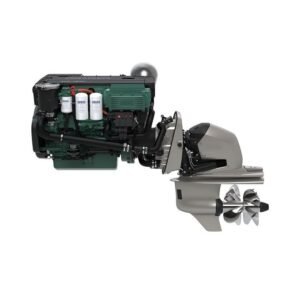
Volvo Penta D4 DPI Diesel Aquamatic Sterndrive
Volvo Penta D4 DPI Diesel Aquamatic Sterndrive Volvo Penta Aquamatic...
Read More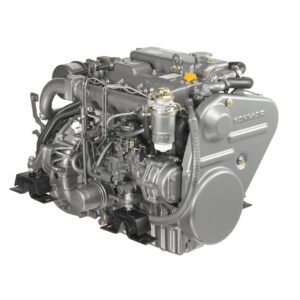
Buy YANMAR 4JH4-HTE Marine Engine
Buy YANMAR 4JH4-HTE Marine Engine Specifications Rated output80.9 kW /...
Read More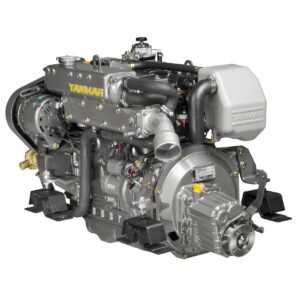
Buy YANMAR 4JH5E Marine Engine
Buy YANMAR 4JH5E Marine Engine Specifications Rated output39.6 kW /...
Read MoreFeatured Pages
MAN V8 Marine Engines
MAN V8 Marine Engines Dynamic V8 yacht propulsion delivering exhilarating...
Read MoreMARINE PARTS AND ACCESSORIES
Marine Parts & Accessories Discover premium marine parts and accessories...
Read More2019 Evinrude E-TEC G2 Outboard Motors
2019 Evinrude E-TEC G2 Engines Built for Those Who Appreciate...
Read More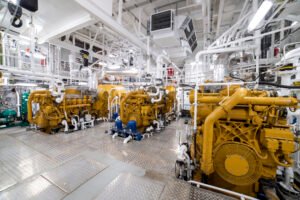
Cat 3512E Marine Engines
Cat 3512E Marine Engines Advanced V12 marine propulsion delivering intelligent...
Read MoreFeatured Blog Articles
Marine Diesel vs Gasoline Engines: Which Is Better for Your Boat?
Choosing between a marine diesel and gasoline engine is ultimately...
Read More
3 Blade vs 4 Blade Propellers: Which Is Right for Your Outboard?
The choice between a three-blade and four-blade propeller is fundamentally...
Read More
A quick tutorial about all things deckboats
Your first and most important lesson in deckboats 101 is...
Read More
Boat Winterization Tips
Shorter days, colorful changes in the leaves, and cooler temperatures...
Read More