Our Outboard Motors Blog is dedicated to everything related to outboard engines, from small personal units to high-performance marine motors. We share expert tips on maintenance, troubleshooting, upgrades, and buying guides, along with the latest industry news. Whether you’re a first-time buyer or an experienced boater, our blog provides the knowledge you need to keep your outboard running smoothly and efficiently.
Choosing between a new and used outboard motor ultimately comes down to the balance between purchase cost, condition, reliability, warranty coverage, technology, service history and intended use. A new outboard…
Repowering means replacing an existing outboard with a newer engine while keeping the boat. It becomes particularly relevant when an older motor has reached the end of its practical service…
Electric outboard motors have developed from small auxiliary propulsion systems into a broader category covering portable motors, fishing applications, tenders, recreational boats and increasingly higher-powered marine propulsion. Unlike combustion outboards,…
Petrol and diesel outboard motors use fundamentally different combustion systems and are suited to different operating requirements. Petrol outboards dominate recreational marine propulsion because of their broad availability, relatively low…
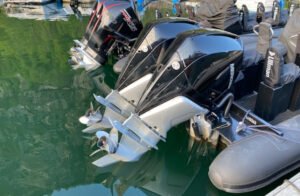
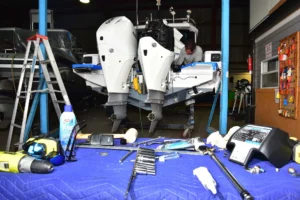
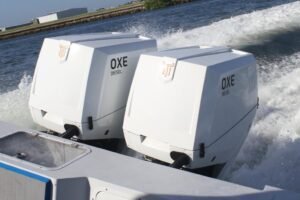
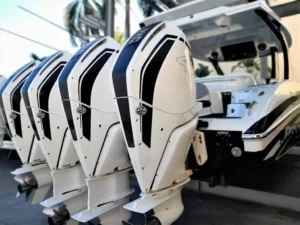
Choosing between a single and twin outboard installation is fundamentally a question of boat size, propulsion requirements, operating profile, redundancy, handling, weight, and total ownership cost. A single engine is…
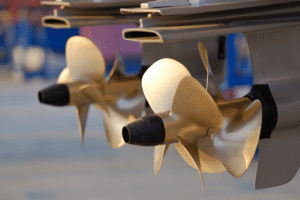
The choice between a three-blade and four-blade propeller is fundamentally a choice about how the available engine power is converted into thrust. Three-blade propellers are widely used because they provide…
Outboard weight is a fundamental specification that should be considered alongside horsepower, shaft length, and installation requirements. The engine is mounted at the stern, so its mass directly affects the…
Trim and tilt are closely related but serve different functions in an outboard installation. Tilt primarily moves the engine through a larger range of motion, commonly to raise the lower…
Proper off-season storage is a preservation process, not simply leaving the outboard unused until the next boating season. During extended inactivity, fuel can deteriorate, moisture can promote corrosion, lubricants can…
Outboard problems should be approached systematically rather than by replacing parts at random. The most useful diagnostic information usually comes from the symptom, warning indicator, engine behaviour, operating conditions, and…