
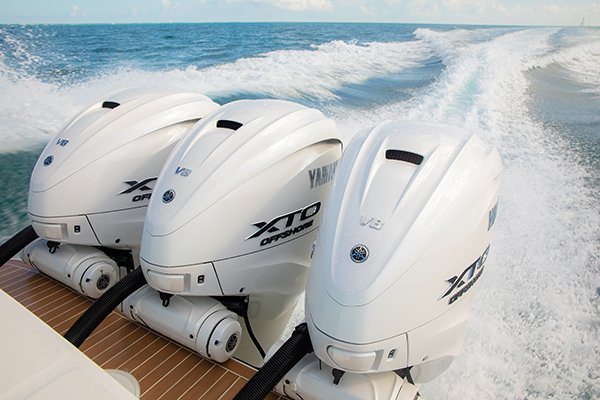
Outboard fuel efficiency is determined by the interaction between the engine, hull, propeller, load, operating speed, and maintenance condition. There is no single adjustment that will make every boat consume less fuel. A correctly sized and maintained engine operating with a properly matched propeller and an efficient hull setup can deliver substantially better economy than an incorrectly configured combination. Modern outboards increasingly use electronic fuel injection and engine-management systems to optimise combustion and fuel delivery; Yamaha, for example, identifies electronic fuel injection and engine-control systems as contributors to fuel economy on its current four-stroke range, while Suzuki’s Lean Burn Control adjusts fuel delivery according to operating conditions.
The most effective way to reduce fuel consumption is therefore to improve the overall propulsion system, rather than simply reducing throttle input. Engine selection, propeller pitch and diameter, boat loading, hull condition, trim, cruising speed, and preventive maintenance all influence the amount of fuel required to move a vessel through the water. Mercury similarly incorporates fuel-management technologies and hydrodynamic gearcase design into current FourStroke models to improve efficiency.
Choose the Correct Engine for the Boat
Fuel efficiency begins before the engine is installed. An outboard should be matched to the boat’s manufacturer-rated horsepower range, weight, hull design, and intended application. An engine that is too small may need to operate at higher throttle settings to maintain speed under load, while an unnecessarily large engine can add weight and cost without delivering a meaningful efficiency advantage for the vessel’s normal operating profile.
The most appropriate engine is one that provides sufficient power for the boat’s typical passenger, fuel, and equipment load while operating efficiently at its intended cruising speed. Yamaha’s current range illustrates how manufacturers engineer different engine configurations around specific applications, with technologies such as electronically controlled fuel injection, variable valve timing, and optimised intake systems used to balance performance and economy.
Propeller Selection Has a Major Impact
A correctly matched propeller is essential to efficient propulsion. Pitch, diameter, blade configuration, and geometry determine how the engine’s power is converted into thrust and where the engine operates within its RPM range. An incorrectly pitched propeller can cause the engine to operate outside its recommended range, reducing performance and potentially increasing fuel consumption.
The propeller should be selected for the specific engine-and-hull combination, taking into account normal operating load and intended use. After installation, the boat should be tested under representative conditions to verify that the engine reaches the manufacturer’s specified wide-open-throttle RPM range. A propeller that allows the engine to operate correctly is an important part of achieving efficient real-world performance.
Operate at an Efficient Cruising Speed
Fuel consumption generally increases as speed and engine load increase, so operating at maximum throttle is rarely the most economical way to cover distance. The most useful comparison is the fuel consumed at the vessel’s normal cruising speed, because this is where the majority of operating hours are often accumulated. A modest reduction in cruising speed can sometimes produce a meaningful improvement in fuel consumption while having a relatively small effect on journey time.
The ideal cruising point varies by boat, engine, propeller, load, and sea conditions. Modern engine-management systems can improve fuel delivery across the operating range, but they cannot overcome inefficient hull operation or excessive speed. Recording fuel consumption against speed and engine RPM can help owners identify the operating range that provides the best balance between journey time and fuel used.
Manage the Boat’s Load
Every additional kilogram carried aboard requires energy to move through the water. Fuel, passengers, fishing equipment, batteries, coolers, water, safety equipment, and other accessories all contribute to operating displacement. Carrying only what is necessary and distributing weight appropriately can improve acceleration, planing behaviour, handling, and fuel efficiency.
Weight distribution is particularly important on planing boats. Excessive stern weight can affect the boat’s running attitude and increase the effort required to achieve efficient planing. The objective is not simply to reduce weight but to maintain a sensible distribution of passengers and equipment so that the hull operates efficiently at cruising speed.
Use Engine Trim Correctly
Power trim changes the angle of the outboard relative to the hull and can have a significant effect on running attitude and efficiency. The correct trim position depends on boat speed, load, sea conditions, and hull design. Excessive negative trim can keep the bow too low and increase wetted resistance, while excessive positive trim can raise the bow too far, reduce propeller efficiency, and potentially cause ventilation.
There is no single trim setting that works in every condition. Owners should use trim to establish a stable running attitude with appropriate handling and efficient propulsion. On compatible modern systems, automatic trim technologies can assist with this process; Mercury’s Active Trim, for example, is designed to automatically adjust engine trim based on operating conditions and engine speed.
Maintain the Engine Properly
Mechanical condition has a direct effect on efficiency. Fuel-system problems, restricted filters, worn spark plugs, cooling-system issues, damaged propellers, incorrect engine oil, or other maintenance deficiencies can affect combustion and overall performance. Following the manufacturer’s maintenance schedule keeps the engine operating within the conditions for which its fuel-management and control systems were designed.
Modern engines use sophisticated electronic controls to optimise fuel delivery, ignition, and other operating parameters. Yamaha explains that its engine-control module uses sensor information to control ignition timing and fuel injection, while Suzuki’s Lean Burn Control adjusts fuel delivery according to engine performance and operating conditions. Maintaining these systems correctly is therefore important to preserving the efficiency designed into the engine.
Keep the Hull and Propeller in Good Condition
Fuel efficiency is not solely an engine issue. Marine growth, excessive fouling, damaged running surfaces, and a damaged or poorly performing propeller increase resistance or reduce propulsion efficiency. A clean hull allows the vessel to move through the water more effectively, while a properly maintained propeller can transfer engine power more consistently.
Propeller damage deserves particular attention because even relatively small deformation can affect thrust and vibration. If fuel consumption rises unexpectedly while engine performance and operating conditions remain unchanged, the hull, propeller, and underwater running gear should be included in the inspection rather than assuming the engine is responsible.
Take Advantage of Modern Fuel-Management Technology
Contemporary outboards increasingly incorporate technologies specifically designed to improve fuel utilisation. Yamaha uses electronic fuel injection and engine-control systems across much of its modern range, while Suzuki’s Lean Burn Control is designed to operate with a leaner fuel mixture under appropriate conditions. Mercury’s current FourStroke range similarly incorporates Advanced Range Optimization and closed-loop fuel-system technologies on applicable models.
These technologies can provide meaningful efficiency benefits, but they work within the limitations of the complete boat. They cannot compensate for an incorrectly sized engine, unsuitable propeller, excessive load, poor trim, or inefficient hull operation. Technology is most effective when the entire propulsion system is correctly matched and maintained.
Measure Real-World Fuel Consumption
Manufacturer efficiency claims and published specifications are useful when comparing engines, but actual consumption varies with the vessel and operating conditions. The most valuable information for an owner is therefore the boat’s own fuel-use data under repeatable conditions. Tracking fuel consumed against distance, engine hours, RPM, speed, and load can reveal changes in performance that may otherwise go unnoticed.
A sudden deterioration in fuel economy can be an early indication that something requires attention. Possible causes include propeller damage, hull fouling, changing operating load, engine maintenance issues, fuel-system problems, or simply operating at higher speeds. Monitoring consumption over time gives owners a practical performance baseline against which changes can be identified.
The Most Effective Approach to Fuel Efficiency
Improving outboard fuel economy is ultimately about reducing unnecessary resistance and ensuring the engine operates efficiently within its intended range. Start with the correct engine and propeller, maintain the propulsion system, keep the hull clean, manage onboard weight, use appropriate trim, and operate at a sensible cruising speed. Each improvement may appear modest individually, but together they can have a substantial effect on fuel consumption and operating range.
The most efficient boat is not necessarily the one with the smallest engine or the lowest throttle setting. It is the boat whose hull, engine, propeller, load, and operating habits are properly matched. That combination allows available power to be converted into useful propulsion with minimal unnecessary fuel expenditure, delivering better range, lower operating costs, and more predictable performance over the life of the vessel.