YANMAR 6BY3-260 (Z) Marine Engine Specifications Rated output191 kW /...
Read MoreDirect Drive Inboard Engines
Purpose matched inboard power for vessels using conventional shaft driven propulsion, from recreational boats to demanding marine applications.
Direct Drive Inboard Engines for Efficient Shaft Propulsion
Direct drive inboard propulsion offers a straightforward mechanical relationship between the engine, transmission and propeller shaft, making it one of the most established arrangements in marine engineering. Rather than redirecting the drivetrain through a V drive arrangement, the propulsion system is engineered around a more direct shaft path from the machinery space toward the propeller. This architecture is widely associated with cruising boats, fishing vessels, trawlers, workboats, yachts and other craft where predictable shaft propulsion, mechanical simplicity and efficient transfer of engine torque are important. We source engines suitable for direct shaft installations across major marine manufacturers, working from the vessel’s existing power unit, shaft arrangement, transmission, required output and installation dimensions to identify an appropriate replacement or new propulsion package.
How Direct Shaft Propulsion Works
In a direct drive installation, the engine’s crankshaft connects through the marine transmission to the propeller shaft, with the gearbox providing the necessary reduction between engine speed and propeller speed. The propeller then converts that transmitted torque into thrust through the water. This relatively conventional arrangement has advantages for vessels designed around predictable shaft geometry, particularly where the engine room, shaft line and underwater running gear were engineered together from the beginning.
The simplicity of the layout does not mean that every direct drive engine is interchangeable. Transmission ratio, shaft diameter, coupling dimensions, engine rotation, mounting positions, propeller characteristics and available engine-room clearance all need to correspond with the vessel. For repower projects, the original engine and gearbox information can therefore be just as valuable as the horsepower figure when determining what can be installed successfully.
Volvo Penta Direct Drive Inboard Engines
Volvo Penta’s inboard shaft range is specifically developed around conventional shaft propulsion, with marine diesel platforms covering everything from compact boats through large yachts and professional vessels. The manufacturer’s current shaft-drive portfolio combines marine torque characteristics with electronic vessel integration, allowing propulsion, controls and monitoring to operate as a coordinated system. Its current range spans compact D1 and D2 engines through substantially larger D13 and D16 platforms.
Volvo Penta direct drive lineup:
D1 Series
* D1-13
* D1-20
* D1-30
D2 Series
* D2-50
* D2-60
* D2-75
D4 Series
* D4-145
* D4-175
* D4-230
* D4-270
* D4-300
* D4-320
D6 Series
* D6-300
* D6-340
* D6-380
* D6-440
* D6-480
D8 Series
* D8-450
* D8-500
* D8-550
* D8-600
D11 Series
* D11-510
* D11-625
* D11-670
* D11-725
D13 Series
* D13-700
* D13-800
* D13-900
* D13-1000
D13 IMO III
* D13 IMO III 700
* D13 IMO III 800
* D13 IMO III 900
* D13 IMO III 1000
D16 MH Series
* D16 MH 550
* D16 MH 650
* D16 MH 750
* D16 MH 850
Volvo Penta’s published shaft-drive range currently extends from 12.2 HP through 1,000 HP on its recreational and commercial inboard platforms, giving customers a substantial progression of direct shaft propulsion options.
Yanmar Direct Drive Marine Engines
Yanmar has a particularly strong position in shaft-driven diesel propulsion, with its marine portfolio covering compact sailboat engines, recreational powerboats and larger professional applications. Its marine systems can be paired with shaft-drive gears, and the manufacturer specifically identifies Kanzaki and ZF shaft-drive gear options within its marine controls and drives portfolio. This makes Yanmar relevant to both straightforward mechanical installations and more electronically integrated propulsion systems.
Yanmar direct drive lineup:
GM Series
* 1GM10
YM Series
* 2YM15
* 3YM20
* 3YM30AE
JH-CR Series
* 3JH40
* 4JH45
* 4JH57
* 4JH80
* 4JH110
4LV Series
* 4LV150
* 4LV170
* 4LV195
* 4LV230
* 4LV250
6LY Series
* 6LY400
* 6LY440
6LF Series
* 6LF485
* 6LF530
* 6LF550
6LT Series
* 6LT500
* 6LT580
* 6LT640
8LV Series
* 8LV320
* 8LV350
* 8LV370
Yanmar’s published marine range extends from 10 to 640 MHP, covering small sailing craft, recreational powerboats, larger motor yachts and selected light-duty commercial vessels.
Cummins Direct Drive Marine Engines
Cummins provides diesel propulsion across recreational and commercial marine markets, with its engine portfolio particularly useful where a vessel requires substantial torque and long-duration operating capability. Its commercial marine documentation distinguishes propulsion ratings by duty classification, which is important for direct shaft vessels that may spend significant periods operating under load. The same engine family can therefore have different approved ratings depending on the vessel’s intended duty.
Cummins direct drive lineup:
B4.5 Series
* B4.5L
QSB Series
* QSB6.7
* QSB7
QSL Series
* QSL9
QSM Series
* QSM11
NTA Series
* NTA855-M
KTA Series
* KTA19-M3
* KTA19-M4
* KTA38-M0
* KTA38-M1
* KTA38-M2
* KTA38-M
* KTA50-M2
QSK Series
* QSK19-M
* QSK38-M1
* QSK50-M1
* QSK60-M
* QSK95
Cummins’ current marine portfolio ranges from lighter propulsion through engines capable of several thousand horsepower. Its commercial documentation identifies applications across fishing, passenger transportation, tugboats, offshore vessels and other professional marine operations.
Caterpillar Direct Shaft Propulsion
Caterpillar’s marine diesel platforms are particularly relevant where direct shaft propulsion is required for vessels operating under demanding workloads. The manufacturer’s commercial propulsion range includes medium and high-output engines intended for workboats, fishing vessels, offshore craft and other professional applications. Engine selection can be matched to the vessel’s operating profile and required propulsion rating rather than relying solely on the maximum output available from a particular family.
Caterpillar direct drive lineup:
C7 Series
* C7.1
C9 Series
* C9.3
C12 Series
* C12
C18 Series
* C18
C32 Series
* C32
* C32B
3400 Series
* 3406C
3500 Series
* 3512C
* 3512E
* 3516C
* 3516E
* 3516E High Output
C280 Series
* C280-6
* C280-8
* C280-12
* C280-16
The scale of the Caterpillar range makes it suitable for direct shaft propulsion across very different vessel classes, from moderate commercial applications through very high-output professional propulsion.
MAN Direct Drive Marine Diesel Engines
MAN’s marine diesel platforms serve the upper end of the propulsion market, particularly where substantial output and defined duty ratings are required. Its commercial engines are developed for applications such as workboats, passenger vessels, fishing vessels, patrol craft and other professional marine operations. The manufacturer’s classification by operating duty is particularly relevant when specifying a direct shaft installation that must deliver reliable propulsion over long operating periods.
MAN direct drive lineup:
D2676 Series
* D2676
D2868 Series
* D2868
D2862 Series
* D2862
* D2862 Dual Fuel
D3872 Series
* D3872
The engine, marine gearbox and shaft line should be specified as one propulsion system, particularly on higher-output vessels where transmission ratio, shaft dimensions and propeller loading have a significant influence on the final installation.
mtu Direct Shaft Marine Engines
mtu operates at the high-performance end of marine diesel propulsion, with engine families designed for yachts, fast vessels and demanding commercial applications. Its large-displacement platforms can provide the power density required by vessels where a conventional shaft-driven arrangement must transmit considerable output through the drivetrain. The manufacturer’s marine portfolio spans several engine series and reaches into very high horsepower applications.
mtu direct drive lineup:
Series 2000
* 8V 2000 M72
* 8V 2000 M84
* 10V 2000 M72
* 10V 2000 M86
* 12V 2000 M72
* 12V 2000 M86
* 16V 2000 M72
* 16V 2000 M86
Series 4000
* 8V 4000 M53
* 8V 4000 M54
* 12V 4000 M53
* 12V 4000 M54
* 12V 4000 M73
* 12V 4000 M93
* 16V 4000 M53
* 16V 4000 M54
* 16V 4000 M73
* 16V 4000 M93
* 20V 4000 M73
* 20V 4000 M93
Series 1163
* 12V 1163 M74
* 12V 1163 M84
* 12V 1163 M94
* 16V 1163 M74
* 16V 1163 M84
* 16V 1163 M94
* 20V 1163 M74
* 20V 1163 M84
* 20V 1163 M94
Series 8000
* 16V 8000 M71L
* 16V 8000 M91L
* 20V 8000 M71
* 20V 8000 M71L
* 20V 8000 M91L
These engines operate in a considerably higher propulsion category than compact recreational diesels and are suited to vessels where high power density, drivetrain engineering and sustained performance are central to the design.
Direct Drive vs. Other Inboard Arrangements
The appeal of direct shaft propulsion lies in its conventional drivetrain architecture and the predictable relationship between engine, gearbox and propeller shaft. That can make it an attractive solution for vessels designed around a traditional engine-room arrangement, particularly where the hull has already been engineered around a specific shaft line. It is also a familiar configuration for many marine technicians, which can be advantageous when maintaining or repowering an established vessel.
The important point is that direct drive should not be selected simply because an engine appears to have the correct horsepower. The transmission reduction, engine operating speed, propeller diameter and pitch, shaft dimensions, shaft angle, engine mounts and available machinery-space clearance all contribute to the final propulsion result. A replacement engine may require different mounting arrangements or gearbox specifications even when its rated output closely matches the original.
Direct Drive Repower and Replacement
For an existing vessel, the most useful starting information is often the engine and transmission already installed. A photograph of the engine identification plate, gearbox plate, existing mounting arrangement and shaft coupling can provide valuable information when determining replacement possibilities. The vessel’s make, model and year can further establish the original propulsion specification and physical limitations.
We can work with customers seeking an equivalent replacement or those considering a modernized propulsion package. Where a direct replacement is unavailable, the search can be expanded to compatible current-production engines while keeping the vessel’s shaft line, transmission requirements and approved power rating in view.
Find the Right Direct Drive Engine
A direct shaft installation deserves a propulsion package matched to the boat rather than a motor selected from horsepower alone. Provide your vessel information, existing engine and gearbox details, required output or preferred manufacturer, and we can help identify suitable direct drive engine options for your project.
Featured Products
Volvo Penta D4 DPH Diesel Aquamatic Sterndrive
Volvo Penta D4 DPH Diesel Aquamatic Sterndrive Volvo Penta Aquamatic...
Read More
Buy YANMAR 6LY2A-STP Diesel Engine
Buy YANMAR 6LY2A-STP Diesel Engine Specifications Rated output324 kW /...
Read More
YANMAR 4LV230 (Z) Marine Engine
YANMAR 4LV230 (Z) Marine Engine Specifications Rated output169 kW /...
Read MoreFeatured Pages
Yanmar 2YM15 For Sale
Yanmar 2YM15 Diesel Engine Uncompromised engineering Explore Inventory 2YM15 Specifications...
Read More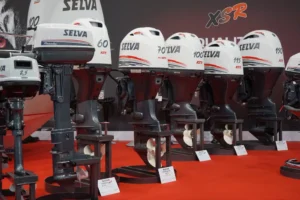
Selva 4 Stroke XSR Outboards
Selva 4 Stroke XSR Outboards Experience the sport-inspired side of...
Read More
MAN Marine Engines
MAN Marine Engines Premium German marine engineering delivering refined propulsion...
Read MoreLuxury Jet Skis
luxury jet skis Premium personal watercraft where advanced technology, powerful...
Read MoreFeatured Blog Articles
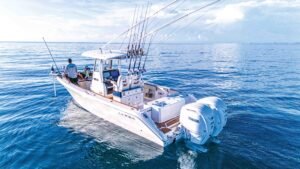
Best Fishing Boats For 2025
2025 Fishing Boat Buyers Guide Explore Inventory Welcome to the...
Read More
How To Afford a Boat on Any Budget
Owning a boat can be more affordable than you think! It’s...
Read More
Best Boats for Lake Fishing
Freshwater boating and fishing are pretty much one and the...
Read More
20 Best Outboard Motors of All Time
Few marine propulsion technologies have evolved as dramatically as the...
Read More