
Outboard shaft length is a critical fitment specification that directly affects how the engine sits on the transom and how effectively the propeller operates in the water. Choosing the correct length is not simply a matter of selecting short, long, or extra-long based on boat size. The measurement must correspond with the boat’s transom configuration and the outboard manufacturer’s shaft specification. Tohatsu, for example, advises measuring from the top of the transom to the bottom of the keel, with common measurements of approximately 15–17 inches corresponding to short-shaft applications and 20–22 inches to long-shaft applications, while some vessels require 25-inch configurations.
The objective is to position the outboard correctly so the lower unit and anti-ventilation plate operate at the appropriate depth relative to the hull. A shaft that is too short can allow the propeller to operate too close to the surface, while an excessively long shaft can position the lower unit deeper than necessary. Either situation can affect propulsion efficiency, handling, trim, and the engine’s operating characteristics. Because transom designs and manufacturer dimensions vary, the final shaft selection should always be verified against the specific boat and outboard manufacturer’s installation requirements.
Measuring Your Boat’s Transom
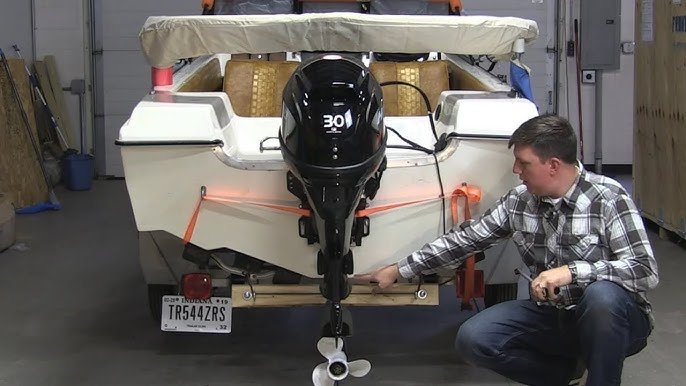
The starting point is an accurate measurement of the transom at the actual location where the outboard will be mounted. For a conventional installation, manufacturers commonly reference the vertical distance from the top of the transom to the bottom of the keel or the relevant hull reference point. Tohatsu’s guidance uses this measurement to determine whether a short, long, or ultra-long shaft is appropriate.
The measurement should not be treated as a universal formula because hull configurations can vary considerably. Mercury’s installation guidance, for example, specifies measuring at the actual mounting location for its ProKicker applications and recommends positioning the anti-ventilation plate no more than one inch below the boat’s bottom. For unusual transoms, stepped hulls, brackets, or multi-engine installations, the manufacturer’s installation documentation should take precedence over a generic measurement.
Short, Long & Ultra-Long Shafts
Outboard manufacturers offer different shaft lengths to accommodate different transom heights and vessel configurations. A common range includes approximately 15-inch short shafts and 20-inch long shafts, with 25-inch and longer configurations available for boats with taller transoms or specialised installations. However, the exact shaft dimensions and available configurations vary between manufacturers and individual engine models. Mercury’s portable outboards, for example, are offered in 15-inch and 20-inch configurations, while Yamaha offers certain high-output models in substantially longer 25-, 30-, and 35-inch configurations.
This is why the correct shaft length should always be identified from the boat’s actual transom measurement and then matched against the manufacturer’s specifications for the particular outboard. A 20-inch shaft from one model should not automatically be assumed to have identical installation dimensions to another manufacturer’s 20-inch model. The published shaft measurement, mounting arrangement, and installation instructions are the authoritative references when confirming compatibility.
Why Shaft Length Affects Performance
Correct shaft length helps place the propulsion unit in the intended relationship to the hull and water flow. If the engine is mounted too high, the propeller can experience ventilation, particularly during acceleration, turning, or operation in disturbed water. This can reduce thrust and cause inconsistent propulsion. If the engine sits excessively deep, drag can increase and the boat may lose some efficiency and performance.
The correct installation position also supports proper steering and trim behaviour. Because the lower unit operates within the water flow generated around the hull, its position can influence how effectively the propeller receives clean water. The aim is not simply to have the propeller submerged, but to establish the installation height specified or recommended for the particular boat, engine, and mounting arrangement.
Shaft Length and Repowering
Shaft length becomes particularly important when replacing an existing outboard. A replacement engine may have the correct horsepower but still be unsuitable if its shaft configuration does not match the vessel’s transom. Repowering therefore requires confirmation of the existing transom height, mounting arrangement, engine dimensions, steering and control configuration, and the shaft options available for the replacement model.
A repower can also involve changes to the mounting height or installation configuration, particularly when moving between manufacturers or different generations of engines. The new engine should be installed according to its manufacturer’s specifications rather than simply copying the previous installation. This is especially important where the replacement engine differs substantially in weight, lower-unit design, shaft options, or mounting hardware.
Shaft Length for Twin & Multiple Outboards
Multiple-engine installations require additional attention because each engine must be correctly positioned relative to the hull and the other propulsion units. Twin-engine boats can use different transom arrangements, engine spacing, mounting heights, and shaft configurations depending on the hull design. High-output outboards may also be available in specialised shaft lengths or counter-rotation configurations intended for multiple-engine applications.
Yamaha, for example, currently offers certain high-output engines with 25-, 30-, and 35-inch shaft configurations, while its technology and installation options vary by model. The correct configuration therefore needs to be established from the vessel’s engineering requirements and the specific manufacturer’s installation documentation rather than assuming that both engines should simply use the same generic shaft size.
Shaft Length and Different Boat Types
Small inflatables, tenders, aluminium boats, fishing boats, centre consoles, pontoons, and larger offshore vessels can all require different shaft configurations. Boat type alone, however, does not determine shaft length. Two boats of similar overall length can have very different transom heights and therefore require different outboard configurations.
The correct approach is to measure the mounting position and compare the result with the engine manufacturer’s available shaft lengths. Tohatsu specifically notes that some of its model-specific shaft dimensions may differ from standard nominal measurements, reinforcing the importance of checking the exact engine specification rather than relying exclusively on general shaft categories.
Common Shaft-Length Selection Mistakes
One of the most common mistakes is choosing an outboard based on horsepower and price while overlooking shaft length until after the purchase. Another is measuring the centre of a transom when the actual engine mounting position is elsewhere, particularly on kicker installations or specialised hull designs. Mercury specifically advises measuring at the actual mounting location for its ProKicker applications.
Another mistake is assuming that a nominal shaft measurement is identical across all manufacturers and models. Published specifications can vary, and some engines offer intermediate or extended configurations designed for particular hulls. Confirming the boat measurement, engine specification, mounting height, and manufacturer’s installation requirements before purchase prevents an otherwise correct engine from becoming an incorrect installation.
Getting the Correct Shaft Length
The correct process is straightforward: measure the boat accurately, identify the manufacturer’s recommended installation position, compare that measurement with the exact outboard’s shaft options, and confirm the final configuration before ordering. Do not rely on boat length alone, and do not assume that an existing engine’s shaft length automatically establishes the correct specification for a replacement.
When there is any uncertainty, the engine manufacturer or qualified marine professional should verify the installation requirements. Correct shaft selection is a relatively simple decision when addressed before purchase, but it becomes considerably more complicated when an incorrectly configured engine has already been installed. Taking the measurement seriously from the beginning protects performance, installation quality, and the long-term reliability of the propulsion system.