
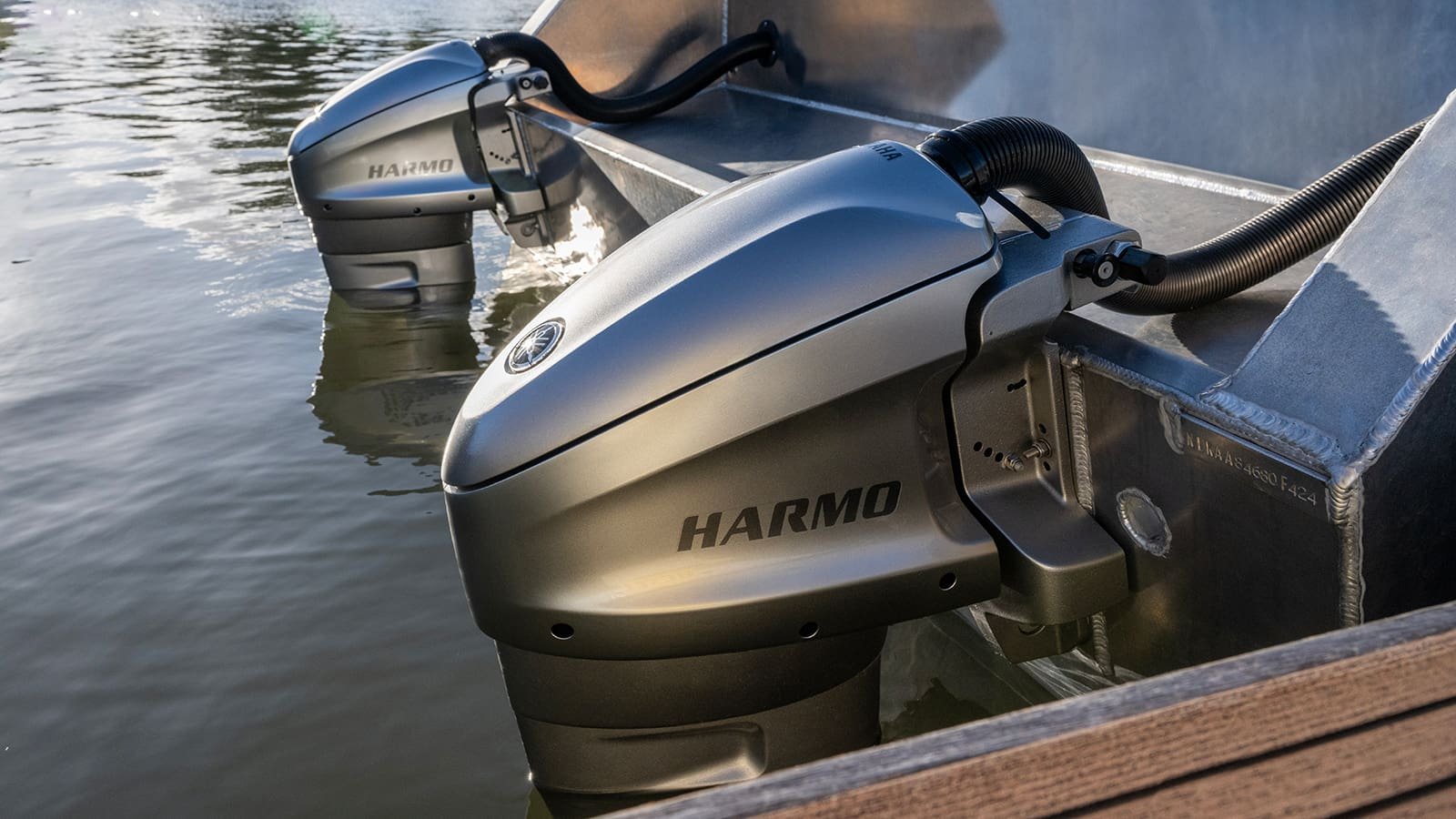
Electric outboard motors have developed from small auxiliary propulsion systems into a broader category covering portable motors, fishing applications, tenders, recreational boats and increasingly higher-powered marine propulsion. Unlike combustion outboards, an electric system uses an electric motor supplied by a rechargeable battery rather than burning petrol or diesel onboard. Current products demonstrate a wide range of configurations: Torqeedo offers compact Travel electric outboards, Minn Kota has dedicated EO and E-Drive electric outboard products, and Mercury’s Avator range currently extends from the 7.5e through the 110e.
The most important difference for an owner is that an electric outboard must be evaluated as a complete propulsion system. Motor output alone does not determine how far or how long the boat can travel. Battery capacity, power consumption, boat weight, hull design, speed, weather, water conditions and operating style all affect real-world range. Mercury explicitly states that its published range examples vary according to boat, load, conditions and battery state of charge, while its Avator system combines the motor with modular batteries, charging equipment, power centres and digital monitoring.
How Electric Outboard Motors Work
An electric outboard converts electrical energy stored in a battery into mechanical power through an electric motor that drives the propeller. The system normally consists of the electric motor, battery or battery bank, power electronics, controls, charging equipment and propeller.
The architecture differs between manufacturers and power classes. Mercury’s Avator 20e and 35e, for example, use a transverse-flux motor and modular 2,300 Wh batteries, while Torqeedo’s Travel range integrates electric propulsion with battery and digital technology in a compact package.
Battery Capacity and Runtime
Battery capacity is one of the most important specifications because it determines how much electrical energy is available for propulsion. Capacity is commonly expressed in watt-hours (Wh) or kilowatt-hours (kWh).
Runtime depends on how much power the motor is drawing. A motor operating at low or moderate power can remain on the water substantially longer than the same system operated continuously near maximum output. Consequently, published runtime should always be interpreted together with the manufacturer’s test conditions.
Mercury’s Avator 20e documentation illustrates this directly: its published example shows 2 hours and 30 minutes of operation at 50% throttle under a specified test configuration, while Mercury clearly states that actual results vary according to boat, load, conditions and battery state of charge.
Electric Outboard Range
Range is determined by available battery energy, power consumption and boat speed. There is therefore no single range figure that applies to an electric outboard independently of the boat.
A heavier boat, higher speed, rougher water or increased throttle demand can substantially increase energy consumption. Conversely, lower-speed operation can extend runtime. Mercury provides model-specific range demonstrations under controlled test conditions rather than presenting one universal range figure for its Avator systems.
For purchasing decisions, the useful question is not simply “How many miles can it go?” but “How much energy does the complete boat require for my normal journey?”
Charging Electric Outboards
Charging is a fundamental part of electric propulsion ownership. The charging system must be compatible with the battery chemistry, voltage, capacity and manufacturer’s charging requirements.
Mercury’s Avator 20e and 35e batteries can be charged individually through their integrated charging ports or collectively through the Power Center. Mercury states that a 230 W charger can recharge a fully depleted 2,300 Wh battery in approximately 10 hours, while its 520 W charger can reduce charging time by more than half. Charging can be performed from a standard household outlet for these systems.
This makes charging infrastructure an important part of selecting an electric outboard. A system may be highly suitable for daily local boating where charging is available overnight but less suitable for an application requiring repeated long-distance operation without access to electrical power.
Performance and Thrust
Electric motors can produce torque immediately, giving electric outboards responsive low-speed propulsion. Mercury describes its Avator transverse-flux motor as delivering immediate torque, while Torqeedo markets its Travel systems around dynamic throttle response and electric propulsion performance.
Performance nevertheless depends on the complete propulsion package. Battery capacity, motor output, propeller design, hull resistance, boat weight and operating conditions determine the actual acceleration and speed achieved. Electric power should therefore be compared using the manufacturer’s tested performance data for the intended boat rather than by converting electric output directly into a combustion-engine horsepower figure without context.
Quiet Operation
One of the most noticeable characteristics of electric propulsion is its low operating noise. Electric motors eliminate the combustion process, exhaust system and many of the mechanical noise sources associated with conventional petrol or diesel engines.
Mercury describes its Avator systems as exceptionally smooth and quiet, while Torqeedo similarly emphasises quiet operation across its Travel range. This characteristic can be particularly valuable for fishing, wildlife observation, cruising and other applications where reduced acoustic disturbance matters.
Zero Direct Exhaust Emissions
Because an electric outboard does not burn fuel onboard, it produces no direct exhaust emissions during operation. Mercury explicitly describes its Avator systems as producing no exhaust fumes and zero direct emissions.
This does not mean that an electric propulsion system has zero environmental impact throughout its entire lifecycle. Battery manufacturing, electricity generation, transportation and eventual battery recycling all involve environmental considerations. The technically accurate distinction is that electric propulsion eliminates direct exhaust emissions at the point of operation.
Maintenance Requirements
Electric outboards generally have fewer combustion-related service requirements because there is no engine oil, fuel injector, spark plug, combustion chamber or exhaust system in the propulsion motor itself.
However, electric does not mean maintenance-free. Batteries, connectors, cables, cooling systems where applicable, seals, propellers, anodes and other marine components still require appropriate inspection and care. Mercury provides dedicated maintenance resources for its Avator systems, while Torqeedo provides product-specific support and documentation for its electric motors.
Saltwater use also requires appropriate corrosion protection and freshwater rinsing according to the manufacturer’s instructions.
Electric Outboard vs Trolling Motor
An electric outboard should not automatically be classified as a trolling motor. The two systems can serve different propulsion roles.
Minn Kota’s official documentation distinguishes its EO Electric Outboard Motor and E-Drive Electric Outboard Motor from its extensive trolling-motor range. A dedicated electric outboard can therefore function as the boat’s primary propulsion system within its designed performance range, whereas a trolling motor is generally designed around low-speed manoeuvring and fishing applications.
The distinction should be made from the manufacturer’s stated application and specifications rather than simply from the fact that both systems use electricity.
Electric Outboards in Saltwater
Electric propulsion can be used in marine environments when the specific motor is designed and approved for the intended application. The important considerations remain corrosion protection, sealing, electrical connections, battery protection and proper post-use maintenance.
Saltwater operation should always follow the individual manufacturer’s requirements. Electric components require particular attention because moisture intrusion or damaged electrical connections can create problems that are fundamentally different from those found in combustion propulsion systems.
Where Electric Outboards Make the Most Sense
Electric outboards are particularly compelling where quiet propulsion, local operating range, easy charging, low routine maintenance and zero direct exhaust emissions are valuable.
They can be well suited to tenders, small boats, fishing applications, inland waterways, short recreational trips and other operations where the required range can be comfortably supported by the available battery capacity and charging infrastructure. Mercury’s current Avator range and Torqeedo’s Travel systems demonstrate the breadth of applications already being addressed by electric outboard technology.
For long offshore passages, continuous high-power commercial operation or locations without dependable charging infrastructure, the practical limitations of battery capacity and recharge time become much more important. In those applications, the propulsion system should be selected around the actual mission rather than assuming that electric is automatically the better technology.
Choosing an Electric Outboard
Before purchasing, evaluate the motor output, battery capacity, voltage, expected runtime, charging time, boat weight, hull type, normal cruising speed, maximum load, saltwater compatibility, controls, shaft configuration and available charging infrastructure.
The manufacturer’s performance data should be treated as the starting point. Mercury, for example, publishes specific battery configurations and test boats for its Avator performance examples rather than claiming that one range figure applies universally. Torqeedo likewise provides model-specific technical information for its Travel electric outboards.
The best electric outboard is therefore not necessarily the one with the highest advertised power. It is the system whose battery, motor and charging architecture properly matches the boat and the journeys it will actually perform.
The Future of Electric Marine Propulsion
Electric propulsion is becoming an established part of the marine industry rather than simply an experimental alternative. Yamaha Motor acquired Torqeedo in 2024 specifically to strengthen its electric marine propulsion capabilities and accelerate development in the electric outboard market. Yamaha’s current corporate strategy also identifies expansion of electric outboards as part of its Marine CASE strategy.
At the same time, established marine manufacturers such as Mercury and Minn Kota continue to offer dedicated electric outboard products, demonstrating that electric propulsion now spans multiple manufacturers and applications.