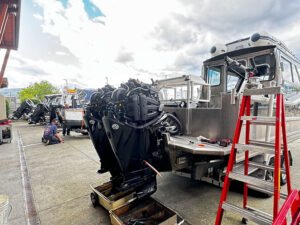
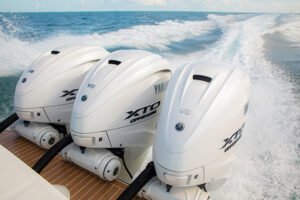
Our Outboard Motors Blog is dedicated to everything related to outboard engines, from small personal units to high-performance marine motors. We share expert tips on maintenance, troubleshooting, upgrades, and buying guides, along with the latest industry news. Whether you’re a first-time buyer or an experienced boater, our blog provides the knowledge you need to keep your outboard running smoothly and efficiently.
Saltwater places additional demands on an outboard because salt deposits, moisture, and the conductive marine environment can accelerate corrosion and affect cooling passages, electrical connections, fasteners, steering components, anodes, and…
Breaking in a new outboard is the controlled initial operating period in which the engine’s internal moving components are allowed to establish their intended running surfaces under prescribed conditions. It…
Outboard fuel efficiency is determined by the interaction between the engine, hull, propeller, load, operating speed, and maintenance condition. There is no single adjustment that will make every boat consume…
There is no single number of years or operating hours that defines the lifespan of an outboard motor. Service life depends on the engine’s design, operating conditions, maintenance history, workload,…
Outboard maintenance is fundamental to protecting engine reliability, performance, and service life. Marine engines operate around water, salt, humidity, vibration, and varying loads, so maintenance needs to address both the…
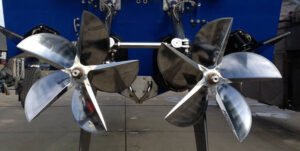
The propeller is the final component that converts an outboard’s available engine power into usable thrust, making its selection just as important as choosing the engine itself. Propeller performance is…
The distinction between two-stroke and four-stroke outboards comes down primarily to how each engine completes its combustion cycle. A two-stroke engine completes the cycle in two piston strokes, producing a…
Outboard shaft length is a critical fitment specification that directly affects how the engine sits on the transom and how effectively the propeller operates in the water. Choosing the correct…
Horsepower is one of the most important specifications when selecting an outboard, but the correct rating is determined by the boat and its intended use, not by horsepower alone. Hull…
Choosing an outboard motor should begin with the boat, not the engine. The correct motor is the one that matches the vessel’s manufacturer-rated power, transom configuration, weight capacity, intended load,…