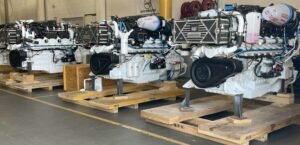

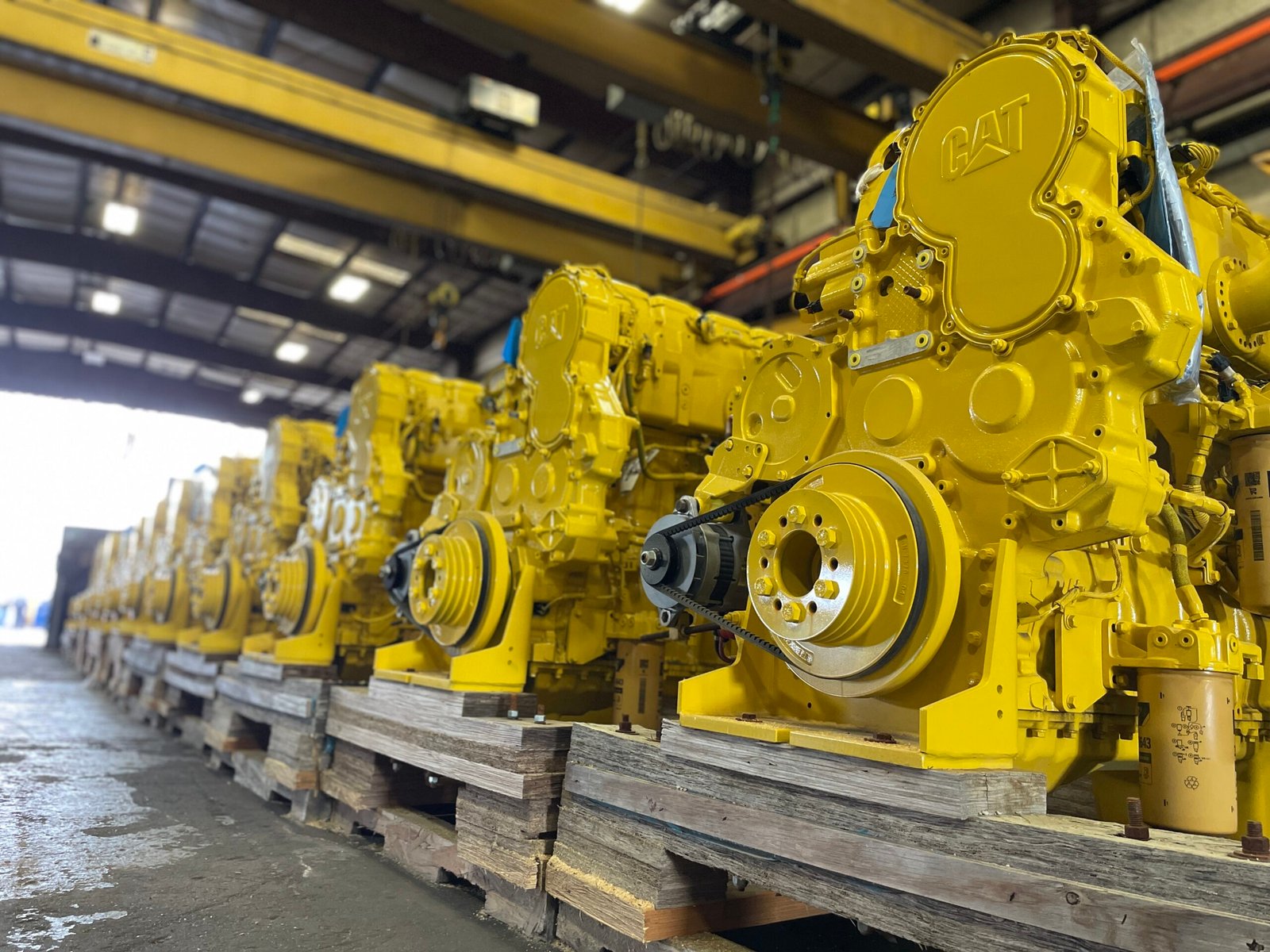
Buying a marine diesel engine is a technical investment that deserves considerably more attention than simply comparing horsepower and asking for the lowest price. Whether the engine is new, used, rebuilt or being purchased as part of a complete repower, the buyer needs to establish whether the engine is appropriate for the vessel, whether its condition matches the seller’s description, whether its operating history can be verified and whether the complete propulsion system will work correctly after installation. YANMAR emphasizes that engine selection must consider the boat type, intended performance, available engine-room space and existing engine footprint, while also warning that a more powerful engine can require changes to the marine gear, engine beds, propeller shaft, propeller, fuel capacity, intake air and exhaust system.
For a used marine diesel, the inspection becomes even more important because the engine’s previous operating life is part of what the buyer is actually purchasing. Operating hours provide useful information, but hours alone do not establish mechanical condition. Maintenance records, previous repairs, fluid condition, cooling-system condition, corrosion, starting behavior, exhaust smoke, vibration, diagnostic information and the results of a professional inspection collectively provide a much stronger picture. Volvo Penta maintains documented service histories and recommends scheduled maintenance and genuine parts, while Caterpillar uses engine hours, fluid condition and maintenance information as part of its inspection and monitoring approach.
1. Start With the Vessel, Not the Engine
The first question should be “What engine does my vessel actually require?”, not “Which engine is the cheapest?” Engine selection should begin with the vessel’s hull type, displacement, intended operating speed, annual operating hours, duty cycle, available engine-room space and existing propulsion arrangement. A displacement vessel, a planing yacht, a fishing boat and a commercial workboat can require very different propulsion characteristics even when their nominal horsepower requirements appear similar. YANMAR specifically explains that displacement hull vessels will normally require similar power output when repowered, while planing vessels can benefit from the improved power-to-weight ratio of modern diesel engines.
The physical installation must also be considered before money is committed. Engine length, width, height, weight, mounting locations, shaft centerline, gearbox configuration and access for future maintenance all matter. A replacement engine that produces the correct horsepower but cannot be installed without major structural or propulsion modifications may ultimately be a more expensive choice than a slightly different engine that fits the vessel correctly. This is why YANMAR recommends assessing the engine-room space and existing engine footprint as part of the initial repower decision rather than treating installation as a problem to solve after purchase.
2. Verify the Exact Engine Identity
Before purchasing, establish the engine’s manufacturer, model, serial number, configuration and rated specification. These details should correspond with the documentation supplied by the seller and, where possible, with manufacturer records. The model name alone may not be sufficient because the same basic engine family can be offered in different ratings, configurations, emissions specifications and marine applications.
The serial number is particularly valuable because it creates a reference point for technical support and service history. YANMAR’s Marine Support Portal, for example, allows owners to register propulsion systems and maintain service and maintenance history, while Volvo Penta provides access to service history through its authorized dealer network and Volvo Penta Connect. If the seller cannot clearly establish what engine is being offered, its specification and its history, the buyer should treat that lack of documentation as a material consideration rather than a minor administrative issue.
3. Check the Engine Hours, But Do Not Stop There
Engine hours are one of the first figures buyers normally request, but they should be interpreted in context. A low-hour engine is not automatically a good engine, and a high-hour engine is not automatically a bad investment. The operating environment, loading, maintenance practices and service history all influence the condition of a diesel engine over time.
YANMAR specifically states that the point at which a marine diesel requires repowering cannot be determined from operating hours alone because longevity is affected by how regularly and consistently the engine has been operated. Volvo Penta likewise provides service information based on both engine hours and elapsed time, reinforcing the importance of looking at operating history rather than treating the hour meter as the marine equivalent of a simple vehicle mileage figure.
4. Demand Complete Maintenance Records
A documented maintenance history is one of the strongest forms of evidence available to a buyer. Records should ideally establish when oil and filters were changed, when cooling-system components were serviced, which major components have been replaced, whether injectors or turbochargers have been serviced, and whether significant repairs or overhauls have already been performed.
Volvo Penta states that its service protocols document required maintenance points and maintain service history, while YANMAR’s Marine Support Portal provides owners with a mechanism for recording service and maintenance history. A well-documented engine gives the buyer considerably more confidence because maintenance can be evaluated against the manufacturer’s requirements rather than relying entirely on verbal claims from a seller.
5. Inspect the Engine Before It Is Started
A proper inspection should begin with the engine cold and stopped, whenever practical. This provides an opportunity to examine the physical condition before heat, vibration and operation alter what can be observed. Look for obvious oil, fuel or coolant leaks, corrosion, damaged wiring, deteriorated hoses, loose components, damaged belts and evidence of previous repairs.
Manufacturer maintenance documentation supports this type of systematic inspection. Cummins maintenance documentation calls for checks of fluid levels, fuel systems, coolant, raw-water systems, exhaust systems, batteries and mechanical systems, while its operating procedures also require inspection for leaks, unusual noises and other indications of incorrect operation. A used engine should therefore be assessed as a complete mechanical system rather than judged primarily by its exterior appearance or ability to start.
6. Examine Oil and Other Fluids
Engine oil can provide important information about the condition and maintenance of a diesel engine. The buyer should verify the oil level and examine its condition, while looking for evidence of contamination or abnormal deterioration. Coolant should also be assessed according to the manufacturer’s procedures, and the fuel system should be checked for contamination and water.
Fluid analysis can provide substantially more information than a visual inspection alone. Caterpillar’s S·O·S Marine Engine Fluid Analysis examines oil, coolant and diesel fuel and is designed to identify wear metals, water, fuel, glycol, dirt and other contaminants that may provide early indications of mechanical problems. For a high-value used marine engine, professional fluid analysis can therefore be an important part of pre-purchase due diligence rather than an unnecessary additional expense.
7. Inspect the Cooling System Carefully
Marine diesel engines depend on effective temperature control, and the cooling system deserves particular attention during a pre-purchase inspection. Depending on the engine, this can involve freshwater coolant, seawater or raw-water circulation, heat exchangers, pumps, thermostats, strainers, hoses and associated components. Corrosion, contamination, leaks or neglected maintenance in these areas can create expensive problems after purchase.
Cummins maintenance documentation identifies coolant level, raw-water systems, exhaust systems and mechanical systems among the inspection points for marine equipment. Caterpillar’s fluid-analysis programme also specifically evaluates coolant condition and contamination because cooling-system condition directly affects engine protection and operating reliability. A buyer should therefore establish not merely that coolant exists, but that the cooling system has been properly maintained and is appropriate for the engine’s operating condition.
8. Check the Fuel System
Fuel quality is critical to diesel-engine operation, particularly where the engine uses modern high-pressure fuel-injection technology. The inspection should consider the fuel filters, water separator, fuel lines, tank condition and evidence of contamination or poor fuel management.
Caterpillar’s marine fuel analysis programme specifically checks fuel quality, contamination and microbial growth and notes that poor-quality fuel can contribute to abnormal wear and increased maintenance and operating costs. A buyer should therefore ask whether the engine has experienced fuel contamination, whether filters have been replaced according to schedule and whether any fuel-system components have previously required repair or replacement.
9. Look Closely at Corrosion
Marine engines operate in an environment where moisture, salt and temperature changes can accelerate corrosion, making corrosion inspection particularly important. Examine exposed fasteners, brackets, electrical connections, cooling components, exhaust components and other areas where corrosion may develop.
The presence of corrosion does not automatically mean that an engine should be rejected, but its location, severity and underlying cause matter. Surface corrosion on an external bracket is a different concern from significant corrosion affecting heat exchangers, electrical connections or structural components. A professional marine-engine inspection can help distinguish cosmetic deterioration from conditions that may affect reliability or future repair costs.
10. Evaluate Belts, Hoses and External Components
Belts and hoses are relatively simple components, but their condition can reveal how consistently the engine has been maintained. Look for cracking, deterioration, abrasion, leakage, looseness and signs of overheating or improper installation.
Cummins maintenance documentation specifically includes inspection of belts for slippage, cracking and wear, while its general inspection procedures include checking the engine and mechanical systems for excessive wear, abrasion and other abnormal conditions. These components should not be ignored simply because they are inexpensive; their failure can affect cooling, charging and other essential engine functions.
11. Inspect the Exhaust System
The exhaust system should be examined for leaks, corrosion, deterioration and evidence of abnormal operation. On turbocharged engines, the exhaust side also forms part of the engine’s air and combustion system, making its condition relevant to overall performance.
YANMAR’s repower guidance requires sea-trial evaluation of exhaust-system performance and back pressure, while its field-service resources identify abnormal exhaust-gas temperature as a condition that may require technical investigation. A buyer should therefore pay attention to the exhaust system during both static inspection and operating tests, particularly if there are unusual temperatures, noises or visible signs of deterioration.
12. Observe the Cold Start
A cold start can reveal information that may be hidden when an engine has already been warmed up. Starting behavior, smoke, idle quality, unusual noises and the time required for the engine to stabilize can all provide useful observations.
A used-engine inspection should therefore, where practical, include starting the engine from genuinely cold condition rather than accepting a demonstration after the seller has already warmed it. Professional pre-purchase inspections commonly combine cold-start observations with operating checks, fluid assessment and other diagnostic procedures. Any abnormal behavior should be investigated rather than explained away without technical evidence.
13. Pay Attention to Exhaust Smoke
Exhaust smoke should be evaluated together with engine temperature, load, operating condition and manufacturer specifications. A brief change in exhaust appearance during startup does not necessarily establish a serious fault, but persistent abnormal smoke can warrant further investigation.
A proper assessment should consider whether smoke is present during cold starting, idle, acceleration and higher load, and whether it is accompanied by excessive oil consumption, poor performance, abnormal temperatures or other symptoms. These observations should be interpreted by a qualified technician because smoke characteristics can have multiple possible causes and should not be used as a standalone diagnosis.
14. Listen for Abnormal Noise and Vibration
A marine diesel should be assessed for unusual mechanical noise, vibration and changes in operating behavior. Excessive vibration can originate from the engine itself, but it can also involve mounts, alignment, the gearbox, shaftline or propeller system.
YANMAR’s repower documentation requires sea-trial evaluation across operating conditions and emphasizes checking the propulsion system’s performance, while its installation guidance stresses correct alignment between the engine, marine gear and propeller shaft. Consequently, abnormal vibration should not automatically be blamed on the engine until the complete propulsion system has been evaluated.
15. Check the Marine Gearbox and Propulsion System
Buying an engine without establishing what comes with it can create unexpected costs. Determine whether the sale includes the marine gearbox, mounts, alternator, starter, heat exchanger, controls and other associated components, and establish whether those components are compatible with the intended vessel.
YANMAR notes that a more powerful replacement engine can require a different marine gear, stronger engine beds, larger propeller shafts and propellers, additional fuel capacity and modifications to intake and exhaust systems. The engine should therefore be purchased as part of a propulsion-system assessment rather than as an isolated mechanical unit.
16. Confirm the Engine’s Duty Rating
Horsepower is not enough to determine whether an engine is suitable for a particular vessel. Buyers should establish the engine’s rated speed, power rating, duty classification and intended application and compare those specifications with the vessel’s operating profile.
This is particularly important for commercial vessels that may operate for long periods under substantial load. An engine selected for a different duty cycle may not provide the expected lifecycle performance when subjected to continuous commercial operation. The appropriate rating should therefore be confirmed from the manufacturer’s technical documentation and matched to the vessel’s actual use.
17. Check Compatibility Before Buying
Before committing to a used engine, compare its exact installation dimensions and specifications against the vessel. This includes engine footprint, mounting locations, shaft centerline, gearbox, rotation, controls, cooling requirements, exhaust configuration and electrical architecture.
YANMAR’s repower guidance makes clear that changing engine power can affect multiple connected systems, including the marine gear, engine beds, propeller shaft, propeller, fuel system, intake and exhaust. This is why a technically sound engine can still be the wrong purchase if it creates excessive installation modifications.
18. Request Diagnostic Information
For electronically controlled engines, diagnostic information can add another layer of evidence to the inspection. Fault histories, engine data and recorded operating information may help identify problems that are not immediately obvious during a visual inspection.
Volvo Penta’s trained technicians use specialized diagnostic tools and can access engine data to help identify root causes of faults, while Cummins provides marine technicians with specialized diagnostic tools and technical training for its electronic marine systems. Where applicable, a buyer should therefore request a professional diagnostic assessment rather than relying exclusively on a visual inspection and test run.
19. Consider Oil Analysis Before Purchase
For a high-value engine, oil analysis can be particularly useful because it can reveal information about internal wear and contamination that cannot be established reliably through visual inspection. Caterpillar’s marine S·O·S programme analyzes oil for wear metals and contaminants and provides recommendations based on the findings.
This does not mean an oil report should be treated as a complete mechanical certification. It is one component of a broader inspection that should also consider maintenance history, operating behavior, cooling, fuel, exhaust, diagnostics and the physical condition of the engine. Used correctly, however, fluid analysis can give a buyer valuable evidence before a transaction is completed.
20. Ask About Previous Major Repairs
A major repair is not automatically negative. In some cases, professionally completed overhaul work can be an advantage because important components may already have been renewed. What matters is what was repaired, why it was repaired, who performed the work and what documentation exists.
MAN’s published service information illustrates the depth of major marine-engine overhauls: its documented 15,000-hour overhaul included disassembly, cleaning, inspection, reconditioning and replacement of components including cylinder heads, liners, pistons, rings, valves and injectors. A buyer should therefore request invoices, technical reports, component records and any available test results rather than treating the word “overhauled” as sufficient evidence of condition.
21. Determine Whether the Engine Has Been Professionally Tested
A seller’s statement that an engine “runs well” is considerably less useful than documented testing. Where possible, establish whether the engine has been bench-tested, load-tested, sea-trialed or professionally inspected and request the corresponding report.
YANMAR’s repower guidance describes a comprehensive sea trial that checks operation at different power levels, cooling-system operation, exhaust performance and back pressure, combustion-air supply, engine-compartment temperature, fuel-tank draw, starting, shifting and wide-open-throttle RPM. The exact testing programme for a used engine will vary according to the engine and sale circumstances, but the principle is straightforward: measured operating evidence is stronger than an unsupported verbal assurance.
22. Inspect the Engine Under Load
An engine that starts and idles at the dock has not necessarily demonstrated that it can deliver its rated propulsion performance. Load testing or a properly conducted sea trial provides substantially more information about how the engine behaves under real operating conditions.
The assessment should consider whether the engine reaches the manufacturer’s specified operating RPM, whether temperatures remain within the appropriate range, whether exhaust behavior is normal and whether abnormal noise, vibration or alarms develop as load increases. YANMAR’s sea-trial guidance specifically includes operation across power levels and checking wide-open-throttle RPM as part of commissioning.
23. Verify Parts and Service Support
The purchase decision should include the engine’s future serviceability. Check whether genuine parts remain available, whether qualified technicians can support the model and whether diagnostic equipment is accessible in the regions where the vessel will operate.
Volvo Penta provides a global dealer network, genuine parts and professional troubleshooting, while Cummins provides marine service vehicles, genuine parts, certified technicians and specialized diagnostic tools. YANMAR maintains a global distributor and dealer network and states that its support network covers more than 130 countries. A less expensive engine can become an expensive ownership proposition if critical components or technical support are difficult to obtain.
24. Check Warranty and Seller Protection
Warranty terms should be established in writing before payment. A buyer should determine whether the engine is sold as used, rebuilt, remanufactured or tested and whether any warranty applies to the engine, accessories and installation.
The exact warranty available will depend on the manufacturer, seller, product condition and market. Buyers should therefore request the written warranty terms rather than relying on statements such as “tested,” “fully serviced” or “ready to install.” A professional supplier should be able to clearly explain what is included, what has been inspected and what protection accompanies the sale.
25. Confirm What Is Actually Included
An engine photograph can be misleading if the buyer assumes every visible component is included in the transaction. Confirm whether the quoted price includes the marine gearbox, mounts, starter, alternator, wiring harness, control system, exhaust components, heat exchanger, instrumentation and other accessories.
This is particularly important during repowering because YANMAR identifies multiple connected systems that can require modification when changing engines. The cheapest engine quotation may not remain the cheapest project once missing components and installation requirements are added to the final cost.
26. Calculate the Complete Installed Cost
The correct purchase comparison is not simply engine price A versus engine price B. The buyer should calculate the engine cost, transportation, inspection, installation, gearbox requirements, engine mounts, shaft and propeller work, exhaust, cooling, fuel-system modifications, electrical integration, commissioning and any necessary certification or regulatory work.
YANMAR specifically advises obtaining a detailed quotation with a full breakdown of technical costs during repowering and warns that some costs may be difficult to define until the vessel has been inspected. A detailed project estimate therefore protects the buyer from discovering substantial additional costs only after the engine has already been purchased.
27. Do Not Ignore Documentation
A professional purchase file should contain the information necessary to identify and support the engine throughout its ownership. Depending on the transaction, this can include the engine model and serial number, specification sheet, operation and maintenance manual, service history, inspection report, test results, overhaul documentation, warranty information and records of included components.
Documentation also becomes valuable after the purchase because it establishes the engine’s history for future maintenance and eventual resale. Volvo Penta specifically notes that documented service history can support resale transactions, while YANMAR provides tools for maintaining engine service records.
28. Use a Qualified Marine Technician for High-Value Purchases
A professional inspection is especially important when the engine represents a substantial financial commitment. The technician should be capable of evaluating the particular engine family and, where appropriate, using manufacturer-specific diagnostic equipment and procedures.
Volvo Penta recommends authorized dealers for professional troubleshooting and maintenance, while Cummins provides trained marine technicians and specialized diagnostic tools. The objective is not simply to obtain a technician’s opinion that the engine “looks good,” but to produce a technically meaningful assessment of condition, operating behavior and foreseeable maintenance requirements.
29. Red Flags That Should Trigger Further Investigation
Several findings should cause a buyer to slow the transaction rather than immediately proceed. These include unexplained low engine hours, missing maintenance records, substantial oil or coolant contamination, significant corrosion, persistent abnormal smoke, unexplained vibration, repeated fault codes, evidence of overheating, undocumented major repairs or a seller unwilling to permit a meaningful inspection.
None of these findings automatically proves that an engine is defective, but each creates a reason for additional technical investigation. The purpose of pre-purchase inspection is precisely to identify uncertainty before money changes hands. Professional inspection procedures and manufacturer maintenance guidance consistently emphasize examining fluids, cooling, fuel, mechanical condition, operating behavior and service history rather than relying on one isolated indicator.
30. The Pre-Purchase Marine Diesel Checklist
Inspection Area What to Verify
Engine identity Manufacturer, model, serial number and specification
Engine hours Meter reading and supporting history
Maintenance Service records, invoices and scheduled maintenance
Oil Level, condition and laboratory analysis where appropriate
Coolant Level, condition and contamination
Fuel Filters, water separation and contamination
Cooling system Pumps, heat exchanger, hoses, strainer and leaks
Exhaust Condition, leakage, corrosion and performance
Belts and hoses Wear, cracking, deterioration and tension
Electrical Wiring, connections, starter, alternator and controls
Diagnostics Fault history and manufacturer-specific diagnostic data
Cold start Starting behavior, smoke, idle and abnormal sounds
Operating test Temperatures, RPM, vibration, smoke and performance
Gearbox Compatibility, condition and included components
Shaftline Alignment, shaft capacity and coupling
Propeller Compatibility with engine output and vessel
Documentation Manuals, service history and technical reports
Warranty Written terms and coverage
Parts support Availability and service network
Installation Complete compatibility with the vessel
Total cost Purchase, transport, installation and future service
Final Buying Advice
The best marine diesel engine purchase is based on evidence rather than appearance, price or reputation alone. A clean-looking engine can have an incomplete maintenance history, while an older engine with extensive documentation and professional service may provide a much clearer ownership proposition. Engine hours matter, but they must be interpreted alongside operating history and maintenance. Manufacturer documentation, diagnostic information, fluid analysis, physical inspection and controlled operating tests provide progressively stronger evidence about the engine’s actual condition.
The buyer should also remember that the engine is only one part of the propulsion system. Compatibility with the vessel’s engine beds, marine gear, shaft, propeller, cooling system, exhaust, fuel system and electronics can determine whether the purchase becomes a straightforward installation or an expensive engineering project. YANMAR’s repower guidance specifically emphasizes these interconnected requirements, while its sea-trial procedure demonstrates the importance of verifying the complete system under operating conditions.
For a high-value purchase, the strongest approach is therefore straightforward: identify the exact engine, verify its history, inspect it cold, analyze its fluids where appropriate, review its diagnostics, test it under load, confirm propulsion compatibility, verify parts and service support, document the transaction and calculate the complete installed cost before committing to the purchase. That process turns a used marine diesel purchase from a gamble into a technically informed investment.