
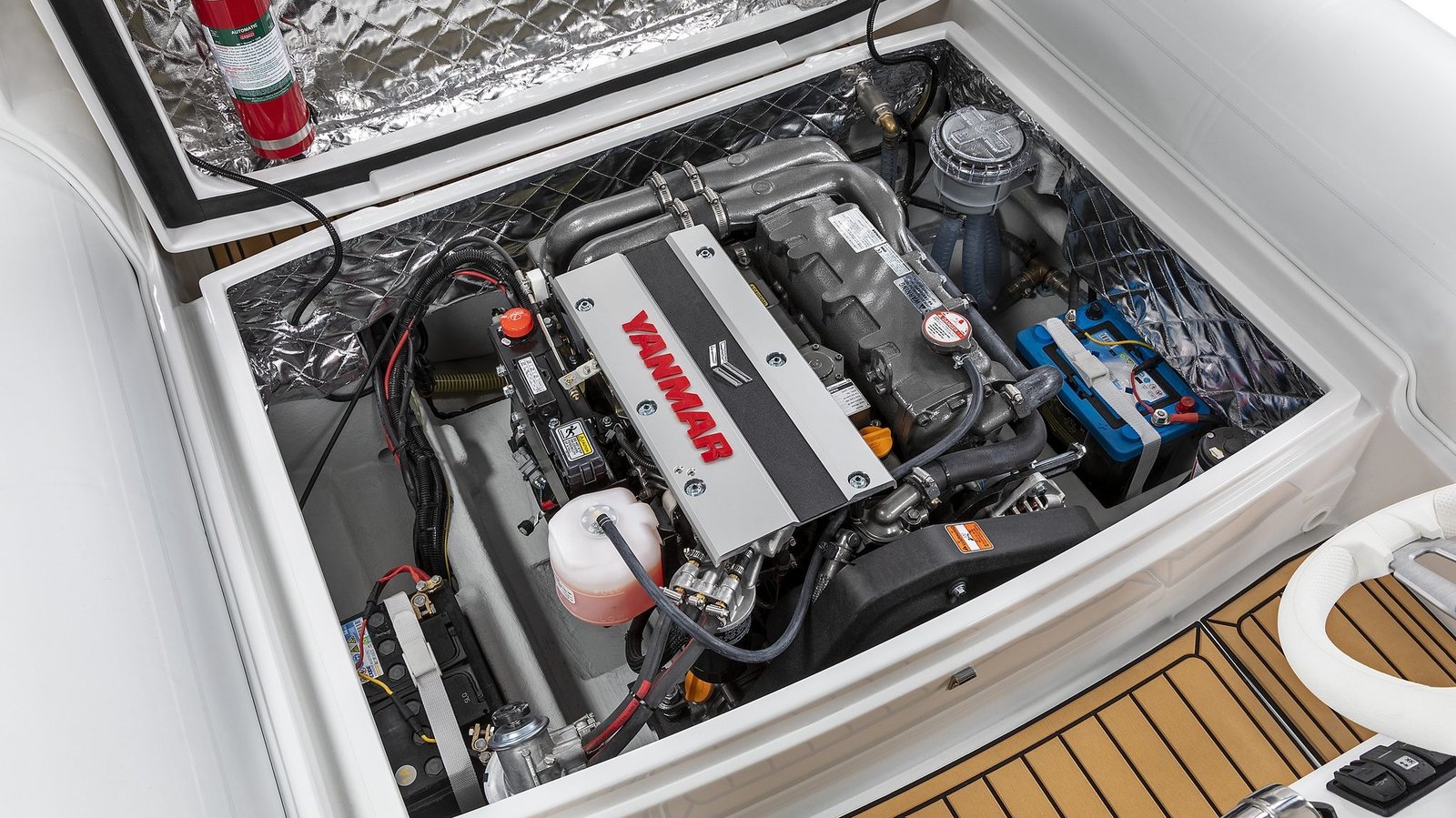
Marine diesel engine repowering is the process of replacing an existing inboard propulsion engine with a new engine while adapting the vessel’s propulsion system to the replacement power unit. It is not simply an engine removal and installation exercise. A successful repower requires consideration of the vessel’s hull, engine-room space, engine footprint, duty cycle, horsepower, gearbox, engine mounts, propeller shaft, propeller, cooling-water intake, exhaust system, fuel system and electrical controls. YANMAR’s current repower guidance specifically recommends evaluating the boat type, desired performance, available engine-room space and existing engine footprint before selecting a replacement engine.
Repowering can become attractive when an existing engine is increasingly unreliable, losing power, consuming excessive fuel or generating rising maintenance costs and downtime. However, operating hours alone do not determine when an engine should be replaced. YANMAR states that engine longevity depends significantly on how regularly and consistently the system has been operated, meaning the engine’s operating history and present condition are more informative than an hour-meter figure by itself.
When Should a Marine Diesel Engine Be Repowered?
The strongest case for repowering usually develops when several problems begin appearing simultaneously. Increasing breakdown frequency, declining power, excessive fuel consumption, rising maintenance expenditure and extended downtime can indicate that continuing to maintain the existing propulsion system is becoming economically unattractive. YANMAR specifically identifies increasing unreliability, horsepower loss, excessive fuel consumption and rising maintenance costs or downtime as reasons to consider repowering.
An owner should nevertheless distinguish between a repairable component failure and a propulsion system approaching the end of its economically useful life. A failed starter, alternator, water pump or cooling component does not automatically justify replacing the entire engine. Conversely, if multiple major components are deteriorating and the vessel is increasingly unavailable because of repairs, investing repeatedly in an aging system can become less attractive than installing a modern replacement.
Engine Hours Are Not the Whole Story
Engine hours are useful when assessing a marine diesel, but they cannot provide a complete picture of engine condition. Two engines with identical operating hours may have experienced very different loads, temperatures, maintenance practices and operating environments.
YANMAR explicitly states that the point at which a diesel system requires repowering cannot be determined from operational hours alone. Consistency of use and operating conditions influence longevity. Consequently, a professional repower assessment should examine maintenance history, oil consumption, fuel consumption, operating temperatures, performance, diagnostic information and the condition of connected propulsion components.
Repower vs Rebuild
One of the most important decisions is whether to rebuild the existing engine or replace it with a new propulsion system. Rebuilding can initially appear less expensive because the existing installation remains largely intact, but the financial comparison should include every component that may require attention.
YANMAR notes that rebuilding often leaves components such as the alternator, starter and water pump in place, meaning their remaining service life can be uncertain. Additional repairs, downtime and unexpected expenses can therefore follow the rebuild. YANMAR states that, as a general consideration, if rebuilding is expected to cost approximately 40% or more of installing a new engine, repowering may be the more attractive investment.
That 40% figure should not be treated as a universal engineering rule. The correct decision depends on the engine, vessel, installation requirements, repair scope and owner’s objectives. It is better understood as a manufacturer-published economic consideration than as a fixed industry threshold.
Selecting the Replacement Engine
The replacement engine must be selected according to the vessel’s actual requirements rather than simply matching the old engine’s horsepower. Hull type, displacement, intended cruising speed, operating profile and engine-room space all influence the correct selection.
YANMAR explains that displacement-hull vessels will normally require similar power output, while planing vessels can benefit from the improved power-to-weight ratio of modern diesel engines. Modern engines can sometimes deliver equal or greater output from a smaller and lighter package, potentially improving acceleration and top speed.
However, increasing horsepower can trigger additional modifications. A more powerful engine may require a different marine gear, stronger engine beds, larger propeller shafts and propellers, increased fuel capacity and modifications to the intake-air and exhaust systems.
Engine-Room Space and Footprint
Physical compatibility is one of the first issues to establish during a repower. The replacement engine must fit within the available space while leaving adequate clearance for inspection, maintenance and removal of serviceable components.
A smaller modern engine can sometimes provide more power than the older unit it replaces, but that does not automatically mean the installation will be straightforward. YANMAR’s repower guide emphasizes checking the fore-and-aft position, surrounding clearance and accessibility for inspection and maintenance.
The installer should therefore measure the existing engine compartment before the replacement engine is ordered and compare those measurements with the exact installation dimensions of the proposed engine.
Engine Mounts and Engine Beds
Engine mounts form the structural connection between the propulsion engine and vessel. During repowering, the existing beds may not correspond with the mounting points of the replacement engine.
YANMAR advises that the installer should use engine mounts provided or specified for the engine requirements because they are designed to minimize the transfer of engine noise and vibration to the hull. If the replacement engine has different mounting dimensions, the engine beds may require modification or reinforcement.
This work should be engineered rather than improvised because mounting geometry directly affects alignment and the mechanical relationship between the engine, gearbox and shaftline.
Gearbox Compatibility
The marine gearbox is an integral part of the propulsion system. When engine power, rated RPM or torque characteristics change, the existing gearbox may no longer be appropriate.
YANMAR specifically warns that a more powerful replacement engine may require a different marine gear. Gear ratio, torque capacity, mounting configuration and output arrangement should therefore be verified before the engine is purchased.
A repower quotation that considers only the engine price can consequently underestimate the actual project cost.
Propeller Shaft and Propeller
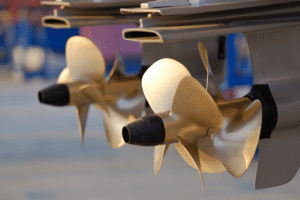
Increasing engine output can increase the mechanical demands placed on the propeller shaft and propeller. The existing shaft may not have sufficient capacity for the new engine, while the old propeller may not correctly absorb the replacement engine’s available power.
YANMAR’s repower documentation identifies the propeller shaft, shaft log, strut and propeller among the components that may require evaluation during a repower. Its guidance also notes that a more powerful engine can require larger propeller shafts and propellers.
The correct propeller should allow the engine to reach its specified operating RPM under the intended vessel load. Repowering without properly matching the propeller can prevent the new engine from delivering its intended performance.
Cooling-Water System
The replacement engine’s cooling requirements must be compared with the vessel’s existing raw-water intake and associated plumbing. A cooling system that was adequate for an older, lower-output engine may not automatically be adequate for a newer or more powerful engine.
YANMAR’s repower guidance specifically advises evaluating the raw-water intake rather than assuming existing systems will be sufficient. It also emphasizes adequate fresh air for combustion and cooling. The seacock, strainer, hoses, pump capacity and heat exchanger arrangement should therefore be reviewed as part of the repower design.
Air Intake and Engine-Room Ventilation
Engine-room airflow becomes particularly important when installing a modern engine in an existing compartment. The engine requires adequate combustion air as well as sufficient ventilation for heat management.
YANMAR’s repower guide notes that engine power can decrease as combustion-air temperature rises above 25°C/77°F and warns that older engine compartments may not provide the airflow required by modern engines. This means that a repower can expose weaknesses in the existing ventilation arrangement even when the engine itself is correctly selected.
Exhaust-System Compatibility
The exhaust system must be checked against the replacement engine’s requirements. Pipe diameter, routing and allowable back pressure are particularly important, especially with turbocharged engines.
YANMAR’s repower guidance specifically states that the existing exhaust system’s back pressure and diameter should be checked against the new engine’s requirements and recommends inspecting retained exhaust components for integrity before installation.
Replacing an engine while leaving an unsuitable exhaust system unchanged can compromise the performance of the new installation and create unnecessary technical problems.
Fuel-System Considerations
The fuel system should also be assessed during repowering. The replacement engine must receive clean fuel in accordance with its specifications, while the tank, lines, filtration and water separation arrangement must be suitable for the new installation.
Fuel capacity can also become relevant when moving to a more powerful engine. YANMAR specifically identifies additional fuel-tank capacity as one of the potential requirements when installing a higher-powered replacement engine.
The fuel system should therefore be evaluated as part of the complete propulsion package rather than treated as an unchanged component.
Electronics and Diagnostics
One of the major differences between an older diesel and a modern marine engine can be the electronic architecture. Current engines can provide electronic controls, digital instrumentation, diagnostics and integration with modern multifunction displays.
YANMAR highlights updated electronics, controls, diagnostics and interconnectivity with modern multifunction displays as benefits of repowering with current compliant engines. Its current marine range also incorporates electronic controls and diagnostic technologies across multiple engine families.
For owners replacing an older mechanical engine, this can represent a substantial modernization of the vessel rather than simply a mechanical replacement.
Emissions Compliance
Emissions requirements should be established before selecting a replacement engine because regulatory requirements can affect which engines are eligible for installation in a particular application or region.
YANMAR advises owners with engines that are not compliant with current emissions regulations to determine whether an appropriate compliant replacement exists for the vessel’s power and space requirements. Where a compliant engine can be installed, the company notes advantages including improved fuel efficiency and the performance and efficiency benefits of modern common-rail technology.
Exact emissions requirements vary according to vessel type, engine category, operating region and applicable regulations, so compliance should be confirmed with the manufacturer, qualified installer and relevant authority before purchase.
Choosing the Right Installer
The installer can be just as important as the engine selected. Repowering requires mechanical, electrical and propulsion expertise, and the quality of the installation can determine whether the new engine performs as intended.
YANMAR recommends selecting an installer who has inspected the vessel personally, understands how the vessel is operated, has experience with comparable repower projects, can provide references and works according to applicable regulations. It also recommends obtaining a detailed quotation identifying technical costs before work begins.
For a major marine repower, the lowest installation quotation is therefore not necessarily the lowest-cost option over the complete lifecycle.
Repower Planning and Project Duration
Planning should begin before the old engine is removed. Engine selection, measurements, accessories, technology upgrades, materials, installation requirements and additional modifications should be identified in advance.
YANMAR states that the physical replacement of an inboard engine can take approximately one to four weeks once the engine arrives at the yard, depending on project complexity, while emphasizing that better preparation beforehand can make the installation process more efficient.
Actual project duration will vary substantially according to the vessel, engine, availability of parts, structural modifications and the scope of the repower.
Repowering One Engine on a Multi-Engine Vessel
Twin-engine and multi-engine vessels require an additional lifecycle consideration. If one engine fails while the other remains operational, the owner should evaluate the remaining engine’s expected service life before deciding whether to replace only the failed unit or both engines.
YANMAR advises that if the remaining engine is approaching the end of its useful life, replacing both engines together may be preferable. If the remaining engine has approximately 50% or more of its expected life remaining, replacing only the failed engine may be a more appropriate option depending on the circumstances.
The goal is to avoid creating a situation where one aging engine requires replacement shortly after the other has already been repowered.
Cost vs Value
The financial case for repowering should extend beyond the initial engine price. Installation, gearbox changes, engine beds, shafting, propeller, cooling, exhaust, fuel-system modifications, electronics, commissioning and certification can all contribute to the final project cost.
At the same time, a modern engine may provide benefits such as improved fuel efficiency, reduced downtime, updated diagnostics and improved performance. YANMAR identifies improved acceleration, power, responsiveness, fuel efficiency, lower running costs, modern electronics and reduced environmental impact among the potential benefits of repowering.
The correct economic calculation is therefore based on total lifecycle value, not simply the difference between the purchase price of the old and new engines.
When Rebuilding May Still Be Better
Repowering is not automatically the correct answer for every vessel. A rebuild may remain sensible when the existing engine has a strong design, compatible installation, good parts availability and a condition that can be restored economically.
The decision should consider the complete rebuild scope. If major internal components, cooling components, electrical equipment and other aging accessories are likely to require replacement, the financial advantage of rebuilding can diminish. YANMAR specifically highlights this uncertainty when comparing rebuilding with installation of a new engine.
A professional inspection and detailed quotation for both options provide a stronger basis for the decision than assumptions based solely on engine age.
A Complete Repower Checklist
Before approving a marine diesel repower, the following should be established:
Area What to Verify
Existing engine Condition, hours, service history
Replacement engine Power, RPM, duty rating and dimensions
Engine room Clearance, access and ventilation
Engine beds Mounting position and structural capacity
Gearbox Ratio, torque capacity and compatibility
Shaft Diameter, length, alignment and capacity
Propeller Diameter, pitch and engine loading
Cooling Intake, seacock, strainer and flow requirements
Exhaust Diameter, routing and back pressure
Fuel Tank, filtration and fuel-delivery requirements
Electronics Controls, instrumentation and diagnostics
Emissions Applicable regulatory requirements
Installer Experience, certification and references
Budget Engine, installation, modifications and commissioning
Support Parts, service and technical assistance
Final Perspective
Marine diesel repowering is best understood as an opportunity to renew the entire propulsion system around a modern power unit, not simply to exchange one engine for another. The engine must be matched with the vessel’s hull, operating profile, gearbox, shaftline, propeller and supporting systems. YANMAR’s current repower guidance repeatedly emphasizes this system-level approach, including engine-room space, propulsion components, cooling, exhaust, fuel capacity, electronics and installer qualifications.
The strongest reason to repower is not simply that an engine has reached a certain number of hours. It is that continued operation, repair and maintenance no longer provide the best balance of reliability, performance and lifecycle cost. Increasing unreliability, power loss, excessive fuel consumption and escalating downtime are meaningful warning signs, particularly when combined with the age and condition of major components.
A properly planned repower can deliver more than a fresh engine. It can provide modern controls and diagnostics, improved propulsion efficiency, updated emissions compliance, renewed supporting systems and a substantially more predictable ownership experience.
The best repower is one planned around the complete vessel, not just the engine sitting at its center.