
Marine diesel reliability is not determined by a single specification, horsepower figure or manufacturer name. Engine life is the result of how the engine is designed, installed, loaded, maintained and operated throughout its service life. A properly matched marine diesel operating within its intended duty rating can deliver years of dependable propulsion, while an engine subjected to excessive load, poor maintenance, inadequate cooling or incorrect installation can experience premature deterioration regardless of its reputation. Yanmar states directly that engine deterioration and wear are influenced by the length of service and the conditions under which the engine operates, while regular maintenance helps prevent unexpected downtime and extend engine life.
This principle applies across the major marine-engine manufacturers, including Yanmar, Volvo Penta, Cummins, Caterpillar, MAN and mtu. Their support and maintenance programmes place substantial emphasis on preventive maintenance, genuine parts, condition monitoring, overhaul planning and technical service. Caterpillar, for example, describes preventive and targeted maintenance as central to maximizing uptime, while Cummins emphasizes proactive rebuild planning to maximize life before overhaul. Volvo Penta likewise identifies planned maintenance and genuine parts as important to maintaining reliable performance throughout engine service life.
1. Duty Cycle Is One of the Biggest Factors
The first question when considering engine longevity should be how the engine will actually be used. A marine diesel powering a private yacht for several hundred hours annually has a very different workload from an engine driving a tugboat, ferry, fishing vessel or commercial workboat for thousands of hours.
Duty rating establishes the operating conditions for which an engine is designed and rated. Sustained high load, frequent operation at maximum output and high annual operating hours place substantially greater cumulative demands on combustion components, bearings, cooling systems, turbochargers and lubrication systems than intermittent recreational use.
This is why two engines with similar horsepower can have very different expected maintenance requirements. The correct engine is not merely one with enough power; it must have a duty rating appropriate to the vessel’s actual operating profile.
2. Correct Engine Sizing Protects Longevity
Engine sizing directly influences reliability. An undersized engine may be required to operate near its maximum output for prolonged periods simply to maintain the vessel’s required speed. That can create a demanding operating profile that is inappropriate for an engine with a lower-duty rating.
Oversizing has different disadvantages, including unnecessary weight, installation cost and potentially inefficient operation if the engine is consistently operated at very low loads. The objective is therefore to select an engine that provides the required performance while operating comfortably within its approved range.
Propeller matching is equally important. Yanmar’s current warranty conditions explicitly identify incorrect propeller matching as an exclusion, reinforcing how closely propulsion loading is connected with engine operation and protection.
3. Operating Load Matters More Than Maximum Horsepower
Maximum horsepower describes what an engine can produce under specified conditions; it does not describe how hard the engine should be worked continuously.
An engine operating at an appropriate cruising load can remain within its intended thermal and mechanical envelope for long periods. An engine repeatedly pushed toward maximum output experiences greater combustion forces, heat generation and component loading.
For this reason, operators should monitor engine load, RPM, coolant temperature, oil pressure, exhaust temperature and fuel consumption rather than relying only on the throttle position or horsepower rating.
The operating profile ultimately determines how much work the engine performs throughout its life.
4. Lubrication Is Fundamental to Engine Life
Engine oil protects bearings, crankshaft journals, pistons, cylinder surfaces, valve-train components and turbocharger bearings while also carrying heat and contaminants away from internal components.
Oil quality, viscosity, pressure and cleanliness therefore have a direct relationship with engine durability. Yanmar specifically identifies inadequate lubrication and prolonged use of engine oil as causes associated with serious component deterioration, including crank damage, abnormal oil pressure, piston-ring problems and premature wear.
The correct oil must always be selected according to the engine manufacturer’s specification. Oil should also be changed according to the manufacturer’s operating-hour and calendar requirements rather than based on a generic interval.
5. Cooling System Condition
A marine diesel continuously converts fuel energy into mechanical power and heat. The cooling system must remove that heat while maintaining the engine within its designed operating temperature.
Restricted seawater flow, deteriorated impellers, blocked strainers, fouled heat exchangers, inadequate coolant circulation or incorrect coolant condition can all compromise thermal management. Repeated operation at abnormal temperatures can accelerate deterioration and potentially damage major components.
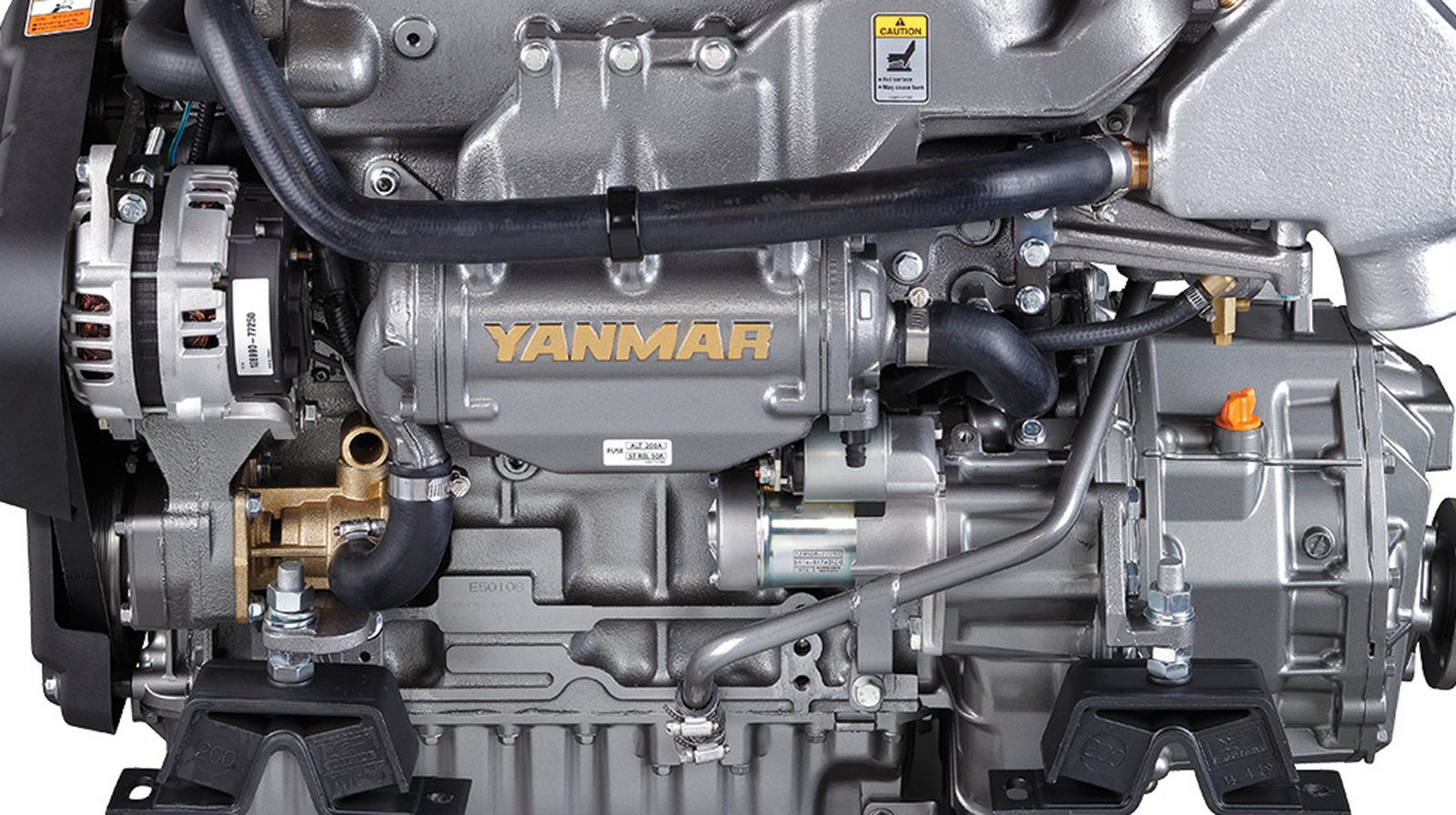
Yanmar’s maintenance documentation emphasizes that periodic service is essential to maintaining engine performance and extending service life, while its marine manuals provide specific inspection intervals for cooling-system components.
6. Fuel Quality and Filtration
Modern marine diesel injection systems depend on clean fuel. Water, sediment and other contaminants can damage precision fuel-system components and interfere with combustion.
Fuel filtration therefore contributes directly to reliability. Yanmar identifies prolonged use of fuel filters as a potential contributor to injection-system deterioration, while its maintenance guidance recommends regular fuel-filter replacement.
Fuel quality becomes particularly important for vessels operating in remote locations or commercial applications where contaminated fuel can result in significant downtime. Proper filtration, water separation and clean fuel-handling practices should therefore be treated as part of the engine’s reliability strategy.
7. Air Intake and Turbocharger Health
Turbocharged marine diesels depend on an adequate supply of clean air. The turbocharger uses exhaust energy to compress intake air, while the charge-air system conditions that air before combustion.
Restricted intake airflow, damaged charge-air components, excessive exhaust back pressure or turbocharger deterioration can reduce engine performance and increase thermal stress. Maintaining the air and exhaust systems is therefore part of maintaining engine reliability.
A loss of power should not automatically be attributed to fuel-system problems. Fuel, air, turbocharger, exhaust and propeller loading all interact and should be evaluated together.
8. Exhaust Back Pressure
An engine’s exhaust system must remain within the manufacturer’s permitted back-pressure limits. Excessive restriction can interfere with exhaust-gas flow and turbocharger operation and may increase exhaust temperatures.
This becomes particularly important during repowering or exhaust-system modification. A replacement engine may have different exhaust-flow requirements from the original engine, meaning an existing exhaust system may not be suitable simply because the horsepower appears similar.
Correct exhaust design therefore contributes to both performance and long-term engine health.
9. Installation Quality
Even an excellent marine engine can suffer reliability problems if it is poorly installed. Engine alignment, mounts, gearbox selection, shafting, propeller, cooling-water intake, exhaust routing, fuel supply and electrical integration all influence the operating environment.
Incorrect shaft alignment can create unwanted loads and vibration. An unsuitable propeller can overload the engine. An inadequate seawater intake can compromise cooling. Excessive exhaust back pressure can affect engine performance.
Reliability therefore begins before the engine is started for the first time.
10. Preventive Maintenance
Preventive maintenance is one of the clearest factors separating predictable engine operation from unexpected failure.
Yanmar states that regular maintenance prevents unexpected downtime and helps extend engine life. Its marine operation manuals specify periodic maintenance according to operating hours and application.
Caterpillar similarly provides planned maintenance programmes and service kits designed around defined service intervals, while its marine support organization combines preventive maintenance, genuine parts, fluid analysis and dealer-backed service.
The important point is that maintenance should be scheduled before components reach failure, rather than waiting for symptoms to appear.
11. Genuine Parts and Correct Specifications
Replacement components must meet the engine manufacturer’s requirements. Filters, belts, injectors, seals, pumps, thermostats and other components are engineered around the engine’s operating conditions.
Cummins specifically warns that non-genuine parts can compromise warranty coverage and may contribute to reduced performance, increased fuel consumption or catastrophic failure.
Volvo Penta similarly recommends genuine parts as part of maintaining the conditions required for long-lasting, reliable and high-performing engines.
For a high-value marine propulsion system, saving money on an inappropriate component can create substantially greater costs later through downtime or premature repairs.
12. Fluid Analysis and Condition Monitoring
Modern maintenance is increasingly moving beyond fixed service intervals toward condition-based maintenance. Oil, coolant and fuel can contain evidence of developing problems before an engine exhibits obvious symptoms.
Caterpillar’s S·O·S Services, for example, analyzes oil, coolant and fuel samples for contaminants and wear indicators that can provide early warnings of developing engine problems.
Volvo Penta also identifies oil analysis as a way to detect trends and provide early warnings of abnormal component wear, helping operators plan preventive maintenance and reduce unplanned downtime.
For high-hour commercial vessels, this type of monitoring can become a valuable part of lifecycle management.
13. Operating Environment
Marine engines work in environments that can be considerably more demanding than ordinary land-based applications. Saltwater exposure, humidity, temperature, dust, vibration, vessel motion and changing loads can all influence component condition.
The engine room must therefore provide appropriate ventilation and airflow, while cooling-water and exhaust systems must be correctly designed for the vessel’s operating environment.
Environmental conditions also affect maintenance requirements. Yanmar explicitly notes that maintenance intervals can vary according to engine application, loads, fuel and lubricating oil.
14. Cold Starts and Operating Temperature
Repeated operation without allowing the engine to reach its intended operating condition can affect combustion, lubrication and thermal stability. Conversely, sustained operation at excessive temperatures can accelerate deterioration.
Operators should therefore follow the manufacturer’s starting, warm-up, loading and shutdown procedures. The engine should be brought into its appropriate operating range rather than immediately subjected to maximum load after starting.
The objective is consistent operation within the conditions for which the engine was engineered.
15. Vibration and Alignment
Excessive vibration is not simply a comfort issue. It can indicate problems involving the engine mounts, gearbox, shaft alignment, propeller, bearings or hull structure.
If left unresolved, abnormal vibration can impose additional mechanical loads on the propulsion system. During installation and repowering, alignment should therefore be verified according to the engine and drivetrain manufacturer’s requirements.
A smooth-running propulsion system is not only more comfortable; it is also better positioned to preserve the mechanical integrity of connected components.
16. Service Support and Parts Availability
Engine longevity depends partly on the ability to maintain the engine correctly throughout its life. Access to trained technicians, genuine parts, diagnostic equipment and overhaul capabilities can significantly influence downtime and lifecycle management.
Cummins provides marine overhaul services and describes proactive rebuild planning as a way to maximize engine life and minimize downtime. Caterpillar similarly supports marine customers through genuine parts, repairs, overhauls, fluid analysis, maintenance programmes and dealer support.
Volvo Penta maintains a global dealer network and technical-support infrastructure, while its commercial warranty structure is tied to specific engine ratings and operating hours.
For commercial operators, supportability is part of reliability.
17. Overhaul Does Not Necessarily Mean the End
A major overhaul is often a planned stage in an engine’s lifecycle rather than an indication that the entire engine has reached the end of its useful life.
Cummins specifically provides marine rebuild programmes designed to restore performance and reliability while maximizing the useful life of existing engines. Volvo Penta likewise offers remanufactured marine engines and components that undergo comprehensive testing and are intended to return vessels to service efficiently.
MAN’s published service documentation similarly demonstrates how major commercial marine engines are managed through planned inspections and overhauls at defined operating intervals.
The important distinction is between engine age and engine condition. A well-maintained engine with a properly executed overhaul can remain a productive propulsion asset for a long time.
18. Engine Design Still Matters
Maintenance cannot compensate indefinitely for an engine that is poorly matched to its application. Fundamental engineering characteristics such as displacement, cylinder design, cooling architecture, fuel system, turbocharging, materials, duty rating and serviceability influence how the engine performs over its lifecycle.
This is where manufacturer engineering becomes important. Volvo Penta, Cummins, Caterpillar, MAN, mtu and Yanmar all develop engines for different operating profiles rather than attempting to use one configuration for every marine application.
The correct comparison is therefore not simply which engine lasts the longest. It is which engine is correctly engineered and rated for the vessel’s actual workload and supported appropriately throughout its lifecycle.
19. The mtu Example: High-Hour Commercial Engineering
mtu’s marine portfolio demonstrates how some high-performance marine engines are designed around extremely demanding operating requirements. The company’s Series 8000, for example, has accumulated more than three million operational hours across its installed base, with certain configurations offering major-overhaul intervals of up to 96,000 hours. mtu also highlights modular power-unit architecture designed to allow major components to be exchanged rapidly and reduce vessel downtime.
This illustrates an important point: long service life is not simply about making components stronger. It also involves designing the engine for inspection, maintenance, overhaul and rapid return to service.
20. The Real Formula for Long Engine Life
The most useful way to understand marine diesel longevity is as a combination of several factors:
Correct engine + correct duty rating + correct installation + correct operating load + correct fluids + clean fuel + effective cooling + scheduled maintenance + genuine parts + professional support = long-term reliability.
Remove one of these elements and the engine’s lifecycle can be affected. An excellent engine that is overloaded, poorly cooled or incorrectly serviced can experience problems prematurely. Conversely, a properly selected and maintained engine can deliver dependable service over a very long operating period.
Final Perspective
There is no single number that determines how long a marine diesel engine will last. Engine life is earned through correct engineering, correct operation and disciplined maintenance. Duty cycle establishes the workload; installation determines how effectively the engine can deliver its power; lubrication and cooling protect the internal components; fuel and air systems support combustion; and preventive maintenance controls deterioration before it becomes failure.
The major manufacturers demonstrate the same lifecycle philosophy in different ways. Yanmar emphasizes scheduled maintenance and genuine parts to extend engine life; Caterpillar combines preventive maintenance, fluid analysis, genuine parts and overhaul support; Cummins provides proactive rebuild programmes; Volvo Penta emphasizes service protocols, genuine parts and condition monitoring; MAN publishes detailed overhaul and service guidance; and mtu engineers certain high-output platforms around long overhaul intervals and rapid serviceability.