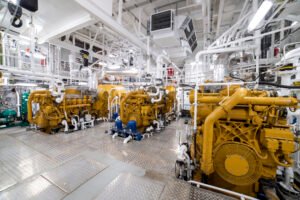

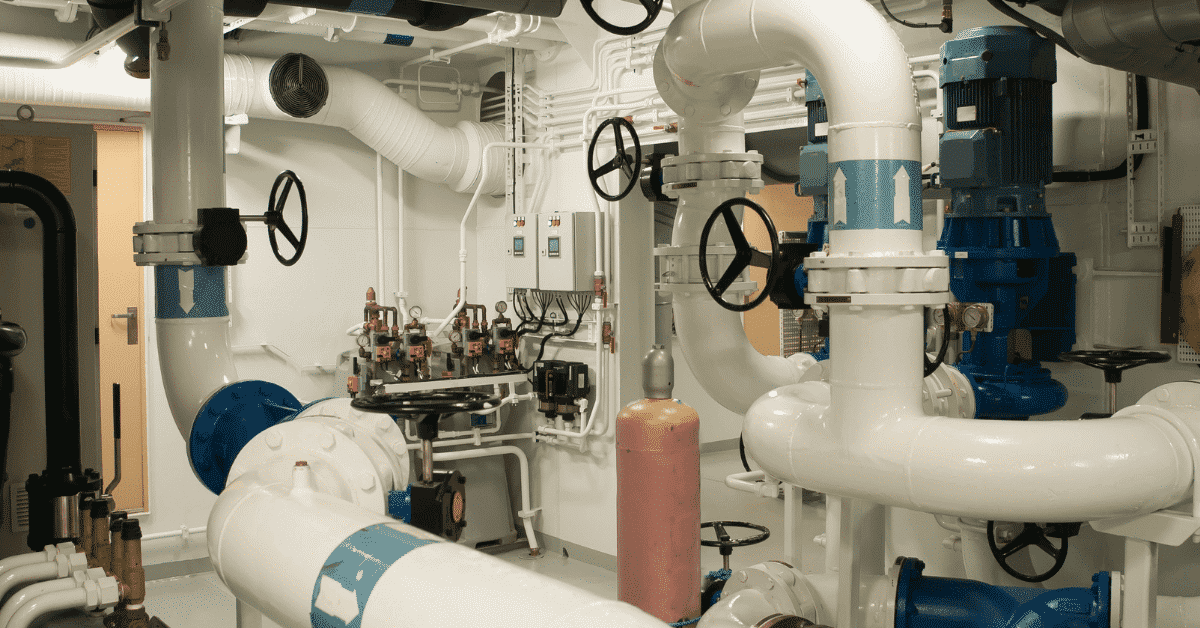
A marine engine cooling system has one fundamental responsibility: remove the heat generated by combustion and keep the engine operating within its designed temperature range. Unlike an automotive engine that operates in a relatively controlled freshwater environment, a marine engine may operate continuously while exposed to seawater, salt, sediment and changing water temperatures. Modern marine propulsion engines therefore commonly use either direct seawater cooling or an indirect system in which a closed freshwater or coolant circuit circulates through the engine while seawater removes heat through a heat exchanger. Yanmar’s marine documentation explicitly describes this two-circuit arrangement, with coolant circulating through the engine and seawater passing through a heat exchanger to cool the closed circuit.
The distinction between freshwater cooling and seawater cooling is important because it affects corrosion protection, operating temperature, maintenance and engine longevity. Volvo Penta describes freshwater cooling as an indirect system in which the engine maintains its own closed coolant circuit and seawater cools that circuit through a heat exchanger. The manufacturer also identifies advantages including reduced internal corrosion, more consistent operating temperatures and reduced engine wear. The cooling system must therefore be considered part of the engine’s overall engineering rather than simply an accessory added after the propulsion system has been selected.
How a Marine Engine Cooling System Works
In a typical indirect marine cooling system, coolant circulates continuously through passages in the engine block and cylinder head, absorbing heat from the combustion process and other hot components. A coolant circulation pump maintains flow through the engine, while a thermostat regulates the temperature by controlling how coolant circulates through the system. The heated coolant then passes through a heat exchanger, where seawater flowing through a separate circuit removes the heat before the cooled engine coolant returns to the engine. Yanmar’s 6LY3 documentation describes precisely this arrangement, including separate freshwater and seawater circuits, freshwater and seawater pumps, a freshwater cooler, oil cooler and intake-air cooler.
The seawater circuit operates independently from the engine coolant circuit. A seawater pump draws water from outside the vessel through the intake system and sends it through components such as the heat exchanger, oil cooler and charge-air cooler before it is discharged, commonly through the exhaust system on wet-exhaust installations. Yanmar specifically notes that its seawater pump uses a replaceable rubber impeller and warns against operating the pump without seawater because the impeller can be damaged. This separation allows the engine itself to operate with controlled coolant chemistry while seawater performs the external heat-removal function.
Freshwater Cooling: The Closed Circuit
Freshwater or coolant cooling is generally an indirect cooling system. The engine contains a closed circuit filled with coolant, which is continuously circulated through internal cooling passages. Because the coolant is not continuously replaced with seawater, the engine’s internal surfaces can be protected using appropriate antifreeze and corrosion-inhibiting chemistry while maintaining a controlled operating temperature.
Volvo Penta identifies several advantages of freshwater cooling, including reduced internal corrosion, higher and more consistent running temperatures, reduced engine wear and potentially extended engine life. Its current D1 marine engines, for example, use freshwater cooling as standard and describe the system as supporting consistent operating temperature and reduced internal corrosion. The benefit is particularly important for engines that may operate in saltwater environments for many years.
Seawater Cooling: The Open Circuit
In a direct seawater-cooled engine, seawater itself is pumped through the engine’s cooling passages and then discharged. The system is mechanically straightforward, but the engine’s internal cooling surfaces are exposed directly to seawater and its associated corrosion risks.
Volvo Penta distinguishes direct seawater cooling from indirect freshwater cooling and notes that, in direct systems, seawater is pumped directly into the engine’s cooling system before being discharged through the exhaust or another outlet. Direct cooling can be effective, but the marine environment makes water quality, corrosion control and proper flushing particularly important considerations.
Freshwater vs Seawater Cooling
The major difference is where the seawater goes. With direct seawater cooling, seawater enters the engine’s cooling passages. With indirect freshwater cooling, seawater remains in a separate open circuit and transfers heat through a heat exchanger without entering the engine’s primary coolant passages.
Feature Freshwater / Indirect Cooling Seawater / Direct Cooling
Engine internal coolant Closed circuit Seawater
Seawater enters engine block No Yes
Heat exchanger Yes May not be required for engine cooling
Internal corrosion protection Stronger Greater exposure
Temperature control More controlled More dependent on seawater conditions
Saltwater exposure inside engine Minimized Direct
Maintenance considerations Coolant + seawater circuit Primarily seawater circuit
Typical modern arrangement Very common Simpler/direct applications
The exact configuration varies by engine manufacturer and model, so the manufacturer’s cooling-system specification should always be treated as the controlling reference.
Why Heat Exchangers Matter
The heat exchanger is the critical interface between the closed coolant circuit and the seawater circuit in an indirect system. Its job is to transfer heat without allowing the two fluids to mix. Hot engine coolant flows through one side while seawater passes through another, with the heat moving across the exchanger’s separating surfaces.
Yanmar’s marine engines use freshwater coolers and heat exchangers to cool the closed coolant circuit, while seawater can simultaneously cool lubricating oil and charge air through separate cooler arrangements. Because the heat exchanger depends on adequate seawater flow and clean heat-transfer surfaces, restrictions, fouling or corrosion can reduce cooling performance even when the engine itself is mechanically sound.
The Seawater Pump
The seawater pump provides the flow needed to remove heat from the engine’s cooling system. Many marine engines use an impeller-type seawater pump, with a flexible rubber impeller rotating inside the pump housing to draw water through the cooling circuit.
Yanmar specifies replaceable rubber impellers in its marine seawater pumps and warns that running the pump without water can damage the impeller. Impeller condition is therefore a significant maintenance item. A damaged or worn impeller can reduce seawater flow and cause the engine temperature to rise, while a failed impeller can interrupt cooling almost completely.
The Freshwater Circulation Pump
The closed coolant circuit requires continuous circulation through the engine. A freshwater or coolant circulation pump moves coolant through the cylinder block, cylinder head, heat exchanger and associated cooling components.
Yanmar describes its freshwater pump as a centrifugal pump responsible for circulating coolant inside the engine. If coolant circulation becomes inadequate because of pump deterioration, belt problems, blockage or another fault, heat removal can decline even when the seawater circuit is functioning correctly. Diagnosing cooling problems therefore requires examining both sides of an indirect system rather than assuming every temperature problem originates with the seawater intake.
Thermostats and Operating Temperature
A thermostat regulates coolant flow according to engine temperature, helping the engine reach and maintain its intended operating range. This matters because an engine that runs too cold can experience poor combustion characteristics and increased wear, while excessive temperature can damage components and compromise lubrication.
The objective is therefore controlled temperature, not simply maximum cooling. Volvo Penta specifically identifies correct working temperature as important for engine lifespan and fuel economy, while Yanmar’s medium-speed cooling documentation describes a constant-temperature coolant system designed to maintain stable engine performance under different loads. The thermostat and coolant circuit work together to maintain that thermal stability.
Cooling the Lubricating Oil
Engine oil performs more than a lubrication function; it also carries heat away from internal components. Marine engines can therefore incorporate dedicated oil coolers to control lubricating-oil temperature.
Yanmar’s 6LY3 documentation identifies an oil cooler in the seawater circuit, where seawater removes heat from the lubricating oil of the engine and marine gear. Maintaining appropriate oil temperature is important because oil viscosity and lubrication performance depend strongly on temperature. The cooling system therefore supports both the engine’s thermal management and its lubrication system.
Charge-Air Cooling
Turbocharged marine engines may also require cooling of the compressed intake air. Compressing air increases its temperature, and cooling that air before it enters the cylinders increases its density and supports combustion management.
Yanmar’s 6LY3 system uses seawater to cool the intake air through an intercooler, while its larger 12AYM-WST system sends seawater through an air cooler before it reaches the heat exchanger that cools engine coolant. Charge-air cooling is therefore another reason the seawater circuit must provide adequate flow even when the engine’s basic coolant temperature appears normal.
Saltwater and Corrosion
Seawater contains salts and minerals that can accelerate corrosion of exposed metals. This is one of the principal reasons indirect freshwater cooling is widely used in modern marine engines: the engine’s internal cooling passages can remain isolated from continuous seawater exposure.
Volvo Penta specifically states that its freshwater-cooled systems prevent seawater exposure inside the engine and reduce corrosion. Yanmar also incorporates sacrificial zinc anodes in seawater-side components such as oil coolers and aftercoolers to help protect metal surfaces against electrochemical corrosion. The anodes themselves are consumed over time and must be replaced according to the manufacturer’s maintenance requirements.
Seawater Filters and Intakes
The seawater cooling system begins at the vessel’s water intake. Water must enter the system freely and pass through the appropriate strainer or filter before reaching the pump and cooling components.
A blocked intake, clogged strainer, damaged hose or restricted seawater passage can reduce flow and cause overheating even though the engine’s internal components are functioning correctly. This is why cooling diagnosis should begin with the complete water path: intake, seacock, strainer, hose, pump, heat exchanger, coolers and discharge. Each component can affect the amount of seawater available for heat removal.
Why Overheating Happens
Marine engine overheating can result from problems on either the freshwater or seawater side of the cooling system. Common causes include inadequate seawater flow, a damaged impeller, blocked intake, fouled heat exchanger, low coolant level, thermostat problems, circulation-pump problems or restrictions in the cooling passages.
The symptoms alone do not always identify the cause. If seawater flow is restricted, the heat exchanger cannot remove sufficient heat from the closed coolant circuit. If coolant circulation is inadequate, the engine can overheat even though seawater is flowing normally. A proper diagnosis therefore requires determining which part of the thermal-transfer chain has failed or become restricted.
Heat Exchanger Fouling
The heat exchanger depends on clean surfaces to transfer heat effectively. Over time, marine growth, scale, corrosion products and other deposits can restrict seawater passages or reduce heat-transfer efficiency.
This can produce a gradual rise in operating temperature rather than an immediate failure. If the engine consistently runs hotter than normal, particularly under increased load, the heat exchanger and seawater circuit should be considered alongside the thermostat, pump and coolant condition. Manufacturer-specific service procedures should be followed because heat-exchanger construction and cleaning requirements vary by engine.
Coolant Condition
Closed-loop coolant is not simply water. Marine engine cooling systems generally require coolant with appropriate antifreeze and corrosion-inhibiting properties, selected according to the manufacturer’s specification.
Volvo Penta identifies antifreeze and anti-corrosion agents as advantages of freshwater cooling, while Cummins documentation specifies coolant mixtures and emphasizes maintaining coolant levels and monitoring coolant temperature. Using incorrect coolant chemistry, allowing coolant concentration to deteriorate or neglecting scheduled coolant replacement can compromise corrosion protection and thermal performance.
Anti-Siphon and Vacuum Protection
Seawater systems installed below or near the vessel’s waterline require careful control of water flow when the engine is stopped. Under certain installation conditions, seawater can potentially siphon into the exhaust or engine if the system is not correctly designed.
Volvo Penta specifies vacuum valves for applicable installations below the waterline and explains that they prevent siphoning through the seawater intake and subsequent water ingress into the engine. This demonstrates that cooling-system design is also a vessel-safety and installation issue, not merely an engine-temperature issue.
Wet Exhaust and Cooling Water
Many marine engines use a wet exhaust arrangement in which seawater is introduced into the exhaust system to cool the exhaust gases and associated components before discharge. This can allow a compact exhaust arrangement while reducing exhaust-system temperatures.
The exact water-injection point and routing must follow the engine manufacturer’s installation specifications. Incorrect exhaust height, hose routing, water injection or anti-siphon arrangements can create serious problems, including the possibility of water entering the engine. Cooling and exhaust systems therefore need to be designed together.
Freshwater Cooling and Engine Longevity
Maintaining the correct coolant temperature and protecting internal engine passages from seawater can contribute significantly to long-term durability. Volvo Penta explicitly links freshwater cooling with reduced corrosion, reduced wear and extended engine life.
However, freshwater cooling does not eliminate maintenance. The seawater circuit still contains pumps, strainers, hoses, heat exchangers, coolers and corrosion-protection components that require inspection. The advantage is that the engine’s primary cooling passages remain within a controlled closed circuit, reducing direct exposure to the marine environment.
Freshwater vs Seawater: Which Is Better?
For many modern inboard marine engines, indirect freshwater cooling offers significant advantages, particularly in saltwater environments. The engine operates with controlled coolant chemistry while seawater remains on the external side of the heat exchanger. This can improve corrosion protection and temperature stability.
Direct seawater cooling remains a legitimate engineering solution for certain engines and applications, particularly where simplicity is important. The appropriate system is ultimately determined by the engine manufacturer’s design. A buyer should never convert or modify the cooling architecture without following the manufacturer’s approved installation requirements.
Cooling System Maintenance
A reliable marine cooling system requires attention to both circuits. The seawater side should be inspected for intake restrictions, strainer blockage, hose deterioration, pump and impeller condition, heat-exchanger fouling and corrosion. The closed coolant side requires monitoring of coolant level, concentration, condition, hoses, belts, pump operation and temperature.
The manufacturer’s maintenance schedule should determine service intervals because cooling-system construction differs between engines. Yanmar’s documentation, for example, specifies inspection and replacement requirements for seawater-pump impellers and sacrificial anodes, demonstrating that these components are considered routine parts of marine-engine maintenance.
Cooling System and Engine Performance
Cooling is directly connected to engine performance. Excessive temperature can force the engine out of its intended operating range, while inadequate charge-air cooling can affect combustion conditions and power delivery. Maintaining stable temperature therefore supports not only reliability but also the engine’s designed performance.
Volvo Penta explicitly identifies correct engine temperature with longer operational life and improved fuel economy, while Yanmar’s medium-speed documentation explains that stable coolant temperature helps maintain consistent engine performance across different loads. A cooling system should therefore be viewed as part of the engine’s performance architecture.
Final Perspective
Marine engine cooling is a carefully balanced system in which coolant, seawater, pumps, thermostats, heat exchangers, oil coolers, charge-air coolers and corrosion protection work together. The fundamental distinction is whether seawater enters the engine directly or remains separated from the engine’s primary coolant circuit. Modern indirect systems commonly keep coolant circulating through the engine while seawater removes the accumulated heat through a heat exchanger.
For vessel owners, the most important principle is to protect both sides of the system. Maintain adequate seawater flow, keep strainers and heat exchangers clear, inspect the seawater pump and impeller, maintain the correct coolant and monitor operating temperature. For engine selection and installation, the manufacturer’s cooling architecture must be followed precisely. A properly designed and maintained cooling system is fundamental to engine reliability, corrosion protection, fuel efficiency and long-term marine propulsion performance.