

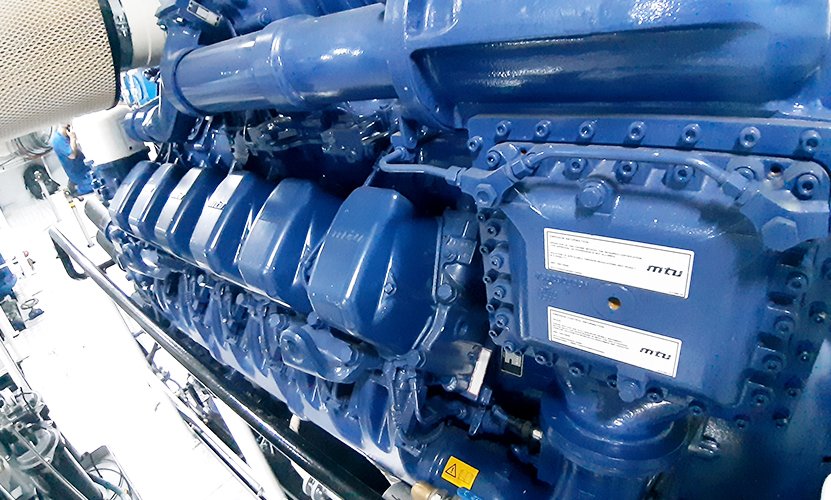
Installing a marine inboard diesel engine is considerably more than lowering the engine into the engine room and connecting the controls. The engine, marine gearbox, mounts, propeller shaft, coupling, propeller, cooling system, exhaust, fuel system and electrical architecture form a single propulsion system, and each component must work within the manufacturer’s specified installation requirements. YANMAR’s marine documentation specifically requires correct alignment between the engine, marine gear and propeller shaft, while its repower guidance emphasizes evaluating the vessel’s existing engine footprint, shafting, propeller, cooling-water intake and other systems before installation begins.
A professionally installed engine should therefore be treated as a complete mechanical and electrical integration project rather than an engine replacement alone. Incorrect alignment or an unsuitable installation can introduce vibration, abnormal loads, premature wear and inefficient power transfer. YANMAR’s operation documentation even requires propeller-shaft alignment to be checked after the initial operating period because flexible engine mounts can settle and alter alignment.
Selecting the Installation Position
The first stage is establishing where the engine will physically and mechanically sit. The available engine-room space, existing engine-bed dimensions, shaft centerline, service access and surrounding equipment all influence the installation. During repowering, the new engine may have a different footprint, height, weight or mounting arrangement from the engine being removed.
YANMAR’s repower guidance specifically recommends evaluating the boat type, desired performance, available engine-room space and existing engine footprint before selecting the replacement engine. It also notes that changing to a different engine can require modifications to the marine gear, engine beds, propeller shaft, propeller, fuel capacity and cooling or exhaust systems.
Engine Mounts and Engine Beds
Engine mounts transfer the engine’s weight and operating forces into the vessel’s structure while allowing the propulsion system to remain correctly positioned. The mounts and engine beds must therefore be suitable for the engine’s weight, dimensions, mounting configuration and operating loads.
Mounting should follow the engine manufacturer’s specified arrangement rather than relying on the dimensions of the previous engine. YANMAR’s 6LF marine documentation, for example, includes inspection of engine-mount tightening torque as part of its maintenance requirements, demonstrating that mounting security remains relevant after installation.
Engine and Propeller-Shaft Alignment
Alignment is one of the most important stages of an inboard installation because the engine’s rotating output must remain correctly aligned with the propulsion shaft and marine gear. The output flange and propeller-shaft coupling must be positioned according to the manufacturer’s specified tolerances.
YANMAR’s installation documentation states that the marine-gear output flange and propeller-shaft coupling must have their flange surfaces parallel and their centers aligned before connection. Its installation procedure uses measurement equipment to establish and correct the relationship between the rotating components.
Caterpillar likewise supplies dedicated alignment equipment for checking the relationship between a marine transmission output shaft and a propeller shaft, using precision measurement to identify and correct alignment conditions.
Why Alignment Matters
Poor alignment can create unnecessary forces in the propulsion system and contribute to vibration, noise, coupling problems, bearing wear and premature component deterioration. Because the engine, gearbox and propeller shaft rotate together as a mechanical system, even a seemingly small installation error can become significant at operating speed.
YANMAR’s marine operation manual specifically instructs operators to check propeller-shaft alignment and states that unusual noise or vibration can indicate a need for alignment adjustment by qualified personnel. Correct alignment is therefore not merely an installation preference; it is part of establishing the mechanical conditions required for reliable propulsion.
Marine Gearbox and Transmission Alignment
The marine gearbox must be correctly installed relative to both the engine and propeller shaft. YANMAR’s marine-gear documentation explicitly states that installation should be performed by a specialist and that the marine gear and engine must be correctly aligned with the propeller shaft. It also specifies selecting a suitable damping coupling between the engine and marine gear.
The gearbox ratio must also be compatible with the engine and propeller. A change in engine or gearbox can alter the propeller’s operating conditions, so repowering should be evaluated as a complete propulsion-system change rather than simply replacing one power unit with another.
Propeller Shaft and Propeller
The propeller shaft transfers the engine’s mechanical output from the gearbox to the propeller. Its diameter, length, material, coupling and support arrangement must be appropriate for the engine’s torque and the vessel’s propulsion configuration.
YANMAR’s repower guide states that a replacement engine may require a larger propeller shaft, shaft log or strut, while a new propeller may also be necessary when engine power or system weight changes significantly. This is especially important when installing a substantially more powerful engine because the existing shaft and propeller may not have been designed for the increased torque and power.
Flexible Couplings
A suitable coupling provides the required connection between the engine or marine gear and the propeller shaft while accommodating the specific characteristics of the propulsion arrangement. The coupling must be selected according to the engine, gearbox, shafting and manufacturer’s installation requirements.
YANMAR’s marine-gear documentation specifically calls for an adequate damping coupling between the engine and marine gear. The correct coupling should therefore be determined as part of the engineered installation rather than selected solely because its physical dimensions appear compatible.
Cooling-System Installation
The engine’s cooling system must receive adequate water flow under the vessel’s operating conditions. Depending on the engine design, this can involve a raw-water intake, seacock, strainer, seawater pump, heat exchanger, hoses and associated plumbing.
YANMAR’s repower guide specifically states that the raw-water intake should incorporate an appropriate seacock and raw-water strainer. During an engine replacement, the existing intake should therefore be evaluated rather than automatically reused, particularly if the new engine has different cooling requirements.
Exhaust-System Installation
The exhaust system must be compatible with the engine’s specifications and installation requirements. Exhaust routing, hose or pipe dimensions, water injection arrangement, support, insulation and allowable back pressure all need to be considered according to the engine manufacturer’s documentation.
A replacement engine can have different exhaust requirements from the original engine. Consequently, an existing exhaust system should be verified against the new engine’s specifications rather than assumed to be suitable simply because it worked with the previous engine.
Fuel-System Installation
The fuel supply must provide clean fuel at the flow and pressure required by the engine while incorporating the appropriate filtration and water-separation arrangements. Modern electronically controlled diesel engines can have highly precise fuel-injection systems, making fuel quality and filtration particularly important.
Fuel-system routing should also account for accessibility, protection from heat and vibration, and the manufacturer’s requirements for connections and filtration. The installation should be inspected carefully for leaks before the engine enters normal service.
Electrical and Electronic Integration
Modern marine diesel engines increasingly depend on electronic control systems, sensors, digital instrumentation and networked controls. Installation therefore extends beyond connecting a battery and starter cable.
YANMAR’s current marine engines incorporate electronic controls and diagnostic information, while its repower guidance highlights the availability of advanced electronic controls and displays on current compliant engines. Volvo Penta’s current repower systems similarly integrate engine technology with electronic vessel-control systems such as EVC and digital displays.
The electrical installation should therefore be designed around the exact engine configuration and its required control architecture.
Engine Rotation and Propulsion Configuration
Engine rotation, gearbox configuration and propeller rotation must be considered together. This becomes particularly important when replacing an existing engine.
YANMAR’s repower guide notes that some single-engine boats are installed at an angle to compensate for asymmetric thrust created by a propeller operating on an inclined shaft. In such installations, the replacement engine’s rotation direction may need to remain the same as the original arrangement, with gearbox selection used where necessary to achieve the required configuration.
This is an example of why an engine that appears physically compatible may still require detailed engineering before installation.
Alignment After Initial Operation
Alignment should not necessarily be considered finished when the engine is first installed. Flexible mounts can settle under operating loads, potentially changing the relationship between the engine and propeller shaft.
YANMAR’s JH-Series operation manual specifically instructs operators to check and, if necessary, readjust propeller-shaft alignment after the first 50 operating hours. It explains that flexible engine mounts can compress slightly during initial operation and cause misalignment.
This makes the post-installation inspection an important part of a professional commissioning programme.
Vibration and Noise During Commissioning
Initial operation provides an opportunity to identify installation problems before the vessel enters normal service. Unusual vibration, abnormal noise, unexpected temperatures or inability to reach the expected operating RPM should be investigated rather than dismissed as characteristics of a newly installed engine.
YANMAR specifically instructs operators to monitor for unusual noise and vibration while gradually increasing and decreasing engine speed and recommends professional alignment adjustment when abnormal conditions are identified.
A proper commissioning process therefore verifies not only that the engine starts but that the entire propulsion system behaves correctly under operating conditions.
Repowering an Existing Vessel
Repowering requires considerably more planning than simply removing the old engine and installing the new one. YANMAR states that planning should include selecting the installation center, choosing the new engine, selecting accessories and technology, allowing time for required materials and identifying additional work that may be necessary.
The company also notes that a repower can take approximately one to four weeks once the replacement engine reaches the yard, depending on project complexity. This demonstrates why accurate planning before delivery can significantly affect the total project duration.
New Installation vs Repower
A new-build vessel offers the advantage of designing the engine beds, shaftline, cooling system, exhaust and electrical architecture around the selected engine from the beginning. A repower must work within an existing hull and often involves adapting or replacing components that were designed for a different engine.
Volvo Penta’s current repower programme illustrates this broader approach by integrating new engines, drives and electronic vessel-control technology as part of a complete propulsion upgrade rather than treating the engine as an isolated component.
The most successful repower projects therefore begin with a complete compatibility assessment before equipment is ordered.
Professional Installation
Marine engine installation involves precision mechanical work, propulsion alignment and system integration, making qualified professional installation particularly important. YANMAR explicitly states in its marine-gear documentation that installation should be performed by a specialist and recommends authorized dealer or distributor assistance for alignment procedures requiring specialized knowledge and techniques.
This is especially important for high-output commercial engines, where installation errors can result in substantial downtime and expensive secondary damage.
Final Perspective
A marine inboard engine does not operate independently. The engine, gearbox, mounts, shaft, propeller, cooling system, exhaust, fuel system and electronics form one propulsion system, and installation quality determines how effectively those components work together. Manufacturer documentation from YANMAR, Volvo Penta, Caterpillar and Cummins demonstrates the importance of correct installation procedures, alignment, propulsion compatibility and precision measurement.
The most important lesson for an owner is simple: do not judge an installation by whether the engine starts. A properly commissioned installation must also maintain correct alignment, achieve the intended operating RPM, provide adequate cooling and exhaust flow, transfer power efficiently through the gearbox and shaftline, and operate without abnormal vibration or noise.
When replacing an existing marine diesel, the best approach is to evaluate the entire propulsion package before installation begins. That means confirming the engine and duty rating, mounting arrangement, gearbox, propeller shaft, propeller, cooling-water intake, exhaust, fuel system, electrical integration and alignment requirements. YANMAR’s repower guidance specifically follows this system-level approach, emphasizing planning and compatibility before the new engine reaches the installation stage.